Parshas Pinchas
Hashem Has a Master Plan!
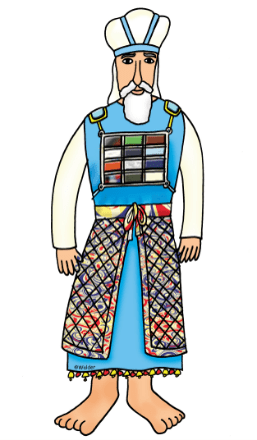
“And it shall be for him and his offspring after him a covenant of eternal priesthood, because he took vengeance for his G-d, and he atoned for the Children of Israel” (Bamidbar 25:13).
A childless couple finally had a child after many years of marriage. The child was born with a serious medical condition. The doctors told the parents that they were lucky, as a treatment had been recently discovered that could save their child’s life. Had their child been born years earlier, before a treatment was discovered, their child could not have lived.
A boy had a skiing accident and received a severe blow to the head. Why did Hashem allow that to happen? The boy underwent an X-ray, and it was discovered from the X-ray that he had a tumor, which was at the stage where it could be removed by surgery. Had they not discovered this right then, it would have been inoperable.
I read an amazing dvar Torah from Rabbi Yissocher Frand about hashgocha, Divine providence. It beautifully illustrates that nothing happens haphazardly. Hashem runs the world and everything that occurs is planned precisely. I hope that this dvar Torah will give chizuk, strength and encouragement to all who are currently undergoing difficult challenges.
Bilaam had been unsuccessful in cursing the Jewish People. However, he devised a sophisticated plan to tempt the Jews to sin with the women of Moav and Midyan. That sin also led some of the Jews to serve idols. Zimri, the nasi, the prince of a shevet, a tribe, committed a public act of immorality with Kozbi, a Midyanite Princess. Pinchas, in his zealousness for Hashem’s honor took a spear and killed both of them. Pinchas did not act in the heat of emotion. He clarified the halacha with Moshe Rabbeinu that, “A person who commits public immorality with a female from Aram, may be killed by a kanai, a religiously zealous individual.” Only then did Pinchas act for the honor of Hashem by killing them. That act also saved the lives of many Jews who were in the process of being killed by a plague. 24,000 Jews had already been killed. Pinchas calmed Hashem’s anger and the plague stopped. For this noble, heroic, and dangerous action, Hashem rewarded Pinchas with an eternal covenant of kehuna, of priesthood.
Rashi points out that Pinchas, the son of Elazar, was Aharon’s grandson. Wasn’t he already a kohen? Then what reward did Hashem give him? Rashi answers that kehuna was only granted to Aharon and his sons and their future descendants. This did not include the grandchildren of Aharon who were already alive but were not anointed together with Aharon and his sons. Thus, until this point in time, Pinchas was NOT a kohen. Pinchas was a regular levi.
This terrible episode with Zimri and Kozbi took place at the end of the 40 years that Bnei Yisroel were wandering in the desert. Thus, for 40 years, Pinchas saw his father, his grandfather and many of his cousins (who were born afterward) serve as kohanim. Yet, Pinchas remained a Levi. Pinchas could have felt bad and maybe even upset that he was not a kohen. Due to an accident of birth, that he was born before Hashem designated Aharon’s descendants as kohanim, Pinchas, seemingly, “lost out”. Pinchas could have felt that he did nothing wrong and yet Hashem was being unfair to him.
The Zohar explains that this was all part of Hashem’s Master Plan. Had Pinchas already have been a kohen (had he been born after his father, Elazar, had been anointed or had he been included in the original anointing) then now Pinchas would have lost his kehuna forever! When he killed Zimri and Kozbi he would have invalidated himself from the kehuna! The law is that a kohen who has killed someone, even unintentionally, is not allowed to bless the nation with birchas kohanim, to offer the Priestly Blessings. (There is a difference of opinion if this would have also excluded Pinchas from all of the other services done by a kohen).
We see clearly that Hashem did not make Pinchas a kohen until now because Hashem wanted Pinchas to be a kohen for the rest of his life. Now, Pinchas received an even greater reward. In the Talmud (Zevachim 101B), Tosefos says that there were 80 Kohanim Gedolim in the first Beis HaMikdash and 300 Kohanim Gedolim in the second Beis HaMikdash who were all descendants of Pinchas!! All of that was possible because Pinchas had not initially become a kohen.
Hashem’s Master Plan was now understood. Hashem wanted to make Pinchas and his future descendants kohanim and Kohanim Gedolim. That was only possible because Pinchas did not become a kohen until he acted heroically for Hashem.
Before this became clear, an observer might have thought that by not making Pinchas a kohen previously, Hashem was being unjust with Pinchas.
The Zohar says that another piece to Hashem’s plan was that Moshe Rabbeinu, who knew almost every halacha without exception, suddenly forgot the halacha relating to Zimri and Kozbi, and did not know what to do when he saw their immoral act. Why didn’t Moshe Rabbeinu know what to do? It was for the same reason, to grant Pinchas the kehuna. Had Moshe Rabbeinu known what to do then Moshe would have acted and not Pinchas. This was all part of Hashem’s Master Plan!
We do not understand why certain events occur. Sometimes, events and circumstances do not appear to make sense. They seem unfair. The true story of Pinchas the kohen demonstrates that Hashem has a Master Plan and everything that occurs is part of that plan.
(Rabbi Yissocher Frand on Torah.org)


