Category Archives: Parshas Beshalach

Parshas Beshalach: I Care About You!

Parshas Beshalach

I Care About You!
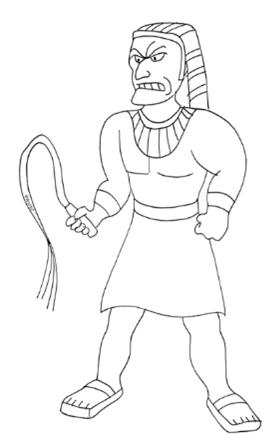
 

“Pharaoh said to the Children of Israel, they are confounded in the land, the Wilderness has closed in upon them.” (Shemos 14:3)

 When Rav Shmuel Auerbach eulogized his father, Rav Shlomo Zalman Auerbach zt”l, he quoted one of his father’s favorite stories.  Rav Baruch Frankel-Te’omim (1760-1828), was a gadol (great Torah scholar) in Europe. His son became engaged to a girl from a very wealthy and prominent family. The families got together before the wedding to discuss the details of the marriage. The future mother-in-law saw that Rav Baruch was distressed. She asked him why he seemed so distressed.  She wondered if he felt that there was something wrong with the shidduch. Rav Baruch told her that he was upset because the water carrier in his city was very sick. The mother of the kallah was shocked by this answer.  A water carrier was not considered a distinguished person.  She could not understand why Rav Baruch would allow the water carrier’s illness to dampen his mood at his family simcha. As soon as he heard this, Rav Baruch announced that the shidduch was off! He would not let his son marry into a family that didn’t feel empathy for the misfortune of another Jew. That showed a lack of sensitivity required of a Jew.

In this week’s parsha, Pharoah finally agreed to let the Jewish People leave Egypt. The pasuk (Shemos 14:3) says, “Pharaoh said to the Children of Israel, they are confounded in the land, the Wilderness has closed in upon them.”  Rashi wonders how the pasuk could say that Pharaoh was speaking to the Children of Israel since there were no Jews left in Egypt at that time. All the Jews had already left Egypt! Rashi interprets the the pasuk to mean that Pharaoh spoke ABOUT the Children of Israel rather than TO them.

Targum Yonosan ben Uziel has a different interpretation. He says that Pharaoh was speaking to Dasan and Aviram, two members of Bnei Yisrael who remained in Egypt.


The Maharal Diskin says that according to one interpretation in Rashi (Shmos 13:18) 80% of the Jewish community perished during the 3 days of Darkness!  They were considered wicked and unworthy of experiencing the Exodus. Dasan and Aviram were very wicked people. They informed on Moshe Rabbeinu to Pharaoh telling Pharaoh that Moshe had killed an Egyptian (the Egyptian who had been beating a Jew). Had Hashem not miraculously saved Moshe, he would have been killed.  Dasan and Aviram did not even want to leave when Bnei Yisrael were given permission to leave the country. If so, asks Maharal Diskin, why were they still alive? How did they survive the plague of Darkness if they were such wicked people? Did they have a special merit?

The Maharil Diskin answers that indeed, Dasan and Aviram did have a special merit. The Egyptians had appointed them to be two of the taskmasters over the Jewish slaves. They were told that they had to make sure that the Jews met their daily quota of producing bricks. Otherwise, they, themselves, would be beaten. When the Jews could not complete their quota, the Jewish taskmasters did not oppress them or whip them. Instead, Dasan and Aviram, and the other Jewish taskmasters, allowed themselves to be beaten by the Egyptians. Dasan and Aviram took the punishment of their fellow Jews. It was this z’chus of suffering on behalf of other Jews that saved Dasan and Aviram.


Rav Yosef Salant (1885-1981) gives a beautiful explanation of a similar theme from a different pasuk. The pasuk in the beginning of the parsha says that when the Jewish people left Egypt, they were “chamushim” (Shemos 13:18). There are different interpretations of what that means. Targum Yonasan ben Uziel explains that “chamushim” means that all the Jews went out with 5 children.


Does that mean that everyone had the same number of children, which was 5? Didn’t the rabbis teach us that the Jewish women gave birth to 6 babies at a time?

The Be’er Yosef by Rav Yosef Salant gives a beautiful answer. When it says that four-fifths of the Jewish people died during the Plague of Darkness, that probably just referred to the adults. Most likely, the young children did not die. That means that four-fifths of the Jewish children at the time of the Exodus were orphans! Who was going to take care of them? The answer is that every one of the remaining Jewish families agreed to take care of the orphans. Thus, every remaining family adopted the orphaned children of four families. Therefore, when the Targum Yonasan ben Uziel says “five children”, he does not mean that everyone went out with 5 children. He means that everyone went out with 5 families worth of children. They went with their own children as well as the children of four other families whose parents had died during the Plague of Darkness!

What a beautiful act of selflessness exhibited by the Jewish People! They took care of so many Jewish children who were not their own! These acts of kindness was a source of extraordinary merit for the Jewish People.


When we show how much we care about our fellow Jews, it brings nachas to Hashem!

We receive great merit for doing so!


(dvar Torah by Rabbi Yissocher Frand from Torah.org)



Parshas Beshalach: You Have An Opportunity To Get Extra Credit!

Parshas Beshalach

You Have An Opportunity To Get Extra Credit!

“Hashem said to Moshe, “Why do you cry to Me? Speak to B’nei Yisrael and let them move on.” (Shmos 14:15)

After Bnei Yisroel left Egypt, they were faced with a terrifying situation. The Egyptian army was chasing them from behind. In front of them was the Red Sea. What were they to do? Hashem told Moshe, “Why do you cry to Me? Speak to B’nei Yisrael and let them move on.” (Shmos 14:15). Rashi says that Moshe started davening to Hashem to save B’nei Yisrael. Hashem said that this was not the time for prayer. Bnei Yisroel should just go forward. Rabbeinu Bachya explains that Hashem was telling Moshe that the matter depended on Bnei Yisroel. Hashem hinted that as soon as Bnei Yisroel would move forward, the sea would part for them. They only needed to demonstrate faith in Hashem by moving forward. Moshe then informed Bnei Yisroel of the great miracle which was about to occur. Whereupon Bnei Yisroel started marching forward.

The Talmud (Sotah 36B-37A) brings two opinions as to whom was the first to enter the Red Sea. Rabbi Meir says that it was the tribe of Binyamin. While Bnei Yisroel stood at the Red Sea, the tribes were discussing who should go first. Meanwhile, the tribe of Binyamin descended into the sea. Whereupon the tribe of Yehudah tried to stop them (different reasons are given as to why the tribe of Yehudah tried to stop the tribe of Binyamin from going into the sea). Both the tribes of Binyamin and Yehudah acted to honor Hashem, Therefore, both tribes were rewarded. The Beis haMikdash was built in the portion of Eretz Yisroel that belonged to Binyamin. Yehudah received royalty.

Maharsha says that the other tribes were fearful of entering the sea. The tribe of Binyamin had a higher level of faith in Hashem. Therefore, they plunged forward.

Eitz Yosef differs. He was not comfortable saying that the other tribes did NOT want to go into the sea. He felt that it was not logical to say that they did not want to fulfill Hashem’s command. All the tribes truly wanted to listen to Hashem. However, there was a difference of opinion as to what Hashem wanted them to do (see the Eitz Yosef for both opinions which were based on the words of the pasuk). The other tribes thought that Hashem’s command was to wait until the land was dry before going in. Nachshon ben Aminadav, the prince of the tribe of Yehudah, correctly thought that they had to first enter the water and THEN it would become dry.

The Talmud then quotes Rabbi Yehudah’s opinion. Rabbi Yehudah said that the tribes did NOT want to go into the sea.  Nachshon ben Aminadav, the prince of the tribe of Yehudah, entered the water and walked until he could go no further without drowning. At that point, the sea split. His tribe and the other tribes followed his lead.

Mechilta deRabbi Shimon Ben Yochai (14:20) discusses Rabbi Meir’s opinion. The Mechilta brings a parable of two sons. Even though the sons’ actions were contradictory, their father understood that they both acted in his honor. According to the the Mechilta, it seems that the actions of the tribes of Binyamin and Yehudah were equal. How can that be? The tribe of Binyamin accomplished an astounding feat, showing their utmost faith in Hashem by jumping into the sea. Seemingly, they placed themselves and their families into grave danger to fulfill the command of Hashem! On the other hand, the action of the tribe of Yehudah seemed minor. The members of the tribe of Yehudah didn’t put themselves in any danger. They simply tried to prevent the tribe of Binyamin from entering the sea because they felt that Hashem did not yet want them to go into the sea. How can both actions be compared and be considered equal?

We must say that the tribe of Yehudah acted totally for the sake of Hashem and would have been ready to give up their lives, if necessary, to fulfill Hashem’s will. Therefore, Hashem considered it as if they did give up their lives to fulfill His will. Their readiness to do so equaled the actions of the tribe of Binyamin who went into the sea.

When you have a strong desire to fulfill a mitzvah, you are credited as if you hae performed that mitzvah. Rav Yisroel Salanter zt”l adds that when you perform an easy mitzvah, you can get rewarded as if the mitzvah was very hard. How? If you do a mitzvah with determination, thinking that you would also perform the mitzvah even if it the circumstances would make it a very difficult mitzvah,

then you will be credited as if you had done the mitzvah under those difficult conditions.


(based,in part, on a dvar Torah from Rav Henach Leibowitz zt”l

as recorded in Chidushei HaLev by Rabbi Binyamin Luban).


Parshas Beshalach: If You Blink, You May Miss Seeing It!

Parshas Beshalach

If You Blink, You May Miss Seeing It!


“The people complained to Moshe saying, “What shall we drink?” He cried out to Hashem, and Hashem showed him a tree; he threw it into the water and the water became sweet” (Shmos 15:24-25)

My wife’s friend just finished sitting shiva for her mother. After her mother passed away, her body had to be driven from Cleveland for burial in New York, late Motzei Shabbos. In the middle of the drive, at about 2 o’clock in the morning, the driver needed to use the restroom. He stopped at a rest-stop. It was totally deserted of cars. The driver was in a quandry. On the one hand, he needed the restroom. On the other hand, there is a very important mitzvah to have someone watch over a dead body the entire time, until burial. The mitzvah is so important that the person watching-over the body is excused from doing other mitzvos that would take him away from this important mitzvah. Just as the driver was considering what to do, a car suddenly pulled-up behind his car. A religious Jew walked out of the car. A coincidence at 2 AM? I think not. The driver was on his way to Lakewood when his engine light went on. He didn’t want to complete the long drive without checking his engine, so he drove into the rest stop. He graciously agreed to watch-over the body while the other driver used the rest room. When the first driver returned, the other driver’s engine light was off. Both drivers continued-on their ways. Interestingly, the engine light of the second driver never went on again.  Clearly, Hashem arranged that the man driving to Lakewood should stop at that specific rest stop at the exact time that he was needed. Hashem’s salvation comes in the blink of an eye, at just the right time.

Rabbi Yissocher Frand (Rabbi Frand on the Parashah 3) says that Parshas Beshalach usually falls out around the time of Tu Bishvat, the New Year for trees. Thus, there must be some parallel between the two. Rabbi Frand quotes the Ziv HaMinhagim who gives a parallel. Why do we celebrate the Rosh Hashanah for trees during the winter months when the trees are dormant rather than in the spring when the trees are in full bloom? The answer is that although the trees look dead, beneath the surface the sap is beginning to flow towards the branches. The beautiful leaves that will appear in the springtime are starting their growth in the dead of the winter. Celebrating the New Year for trees now, teaches us not to give up hope when things seem bleak. Salvation can come speedily.

In this week’s Parsha, the Jews had traveled in the desert for three days without finding water. When they arrived at Marah, they were very frustrated. They found water but it was undrinkable. Things appeared to be bleak. What could they drink? Hashem showed Moshe a certain tree and told Moshe to throw the tree into the water. The bitter water turned sweet and became drinkable. In an instant, Hashem changed a bleak situation into a positive one. Hashem’s salvation came in the blink of an eye.

The Talmud (Pesachim 116B) quotes Rabban Gamliel who explains that we eat matzah at the Pesach seder to commemorate the matzah that baked on the back of the Jews as they left Egypt. The Torah (Shmos 12:39) states further, that the Jewish People had to leave quickly and had not prepared food for the journey ahead.

The question is obvious. The Jewish People were about to go on a journey through the desert. Why didn’t they prepare food for the trip? How could they possibly leave without preparing provisions for the way?

There are several different answers to this question. The Torah has such depth that there are different ways of understanding it. Even when different commentaries have different approaches to answer a question, the answers are not mutually exclusive. They are all accurate.

Rashi says that this showed the Jews’ absolute faith in Hashem to provide them with their needs. Hashem rewarded them for this beautiful show of faith by making them holy to Hashem.

HaRav Naftoli Tzvi Yehudah Berlin zt”l (in sefer Ha’emek Davar) has a different explanation. He says that the Jews purposely did not gather provisions for a long journey to make the Egyptians think that they were only leaving for a short time, to serve Hashem, and would soon return.

The Da’as Zekainim says that they had no time to prepare provisions because the Egyptians were trying to rush them out. The Bekhor Shor says similarly. They should have prepared provisions since Moshe Rabbeinu had already told them that they would be leaving Egypt after this plague. They thought they would have time to prepare, not realizing that they would be rushed out and would not have the time.

Rabbi Yissocher Frand (Rabbi Frand on the Parashah) offers a different insight. Moshe had told the Jews ahead of time that they would be leaving Egypt in the morning, after this last plague. Then why did they not prepare provisions for the long journey ahead? Rabbi Frand posits that perhaps the Jews had given up hope of ever leaving Egypt. After each plague, they had expected to leave Egypt. They probably were all packed and ready to go. Yet they were disappointed, time and time again. Although Moshe had told them that they would be leaving the morning after the plague of the Firstborn, by then they could not get excited because they had experienced so many disappointments. When they were actually redeemed the next morning, it shocked them. They had to leave quickly without time to prepare. They failed to realize that Hashem’s salvation can come as quick as the blink of an eye, so they were totally unprepared when it did occur.

A problem that seemed insurmountable can vanish in thin air, in an instant.

Hashem can redeem us from national problems and personal problems in the blink of an eye!