Parshas Devarim
Bully Me No More!
“I instructed your judges at that time, saying, ‘Listen among your brethren and judge righteously between a man and his brother or his litigant. You should not show favoritism in judgment. Small and great alike shall you hear…’” (1:16)
Moshe Rabbeinu gave instructions to the judges. Rashi says that the judges were told to be patient and deliberate in judgement. Even if they already had similar cases in the past, they were instructed to discuss the current case thoroughly. The judges were also told not to show any favoritism. Ohr HaChaim says that the judges were told to pay equal attention to both parties in a dispute. The judges should not do anything that might be interpreted by one of the parties that the judges favor one side over the other. The judges shouldn’t even look at one person while he is presenting his case while not looking at the other person when he presents his case. Rambam (Hilchos Sanhedrin 21) says that the judges should not allow one of the parties to speak to the full extent that he feels necessary while the other is told to speak concisely. The judges should not treat one person favorably and speak gently to him while treating the other person harshly and speaking sternly to him. One of the litigants should not be allowed to sit, while the other stands. The Rambam even adds that if one of the litigants is dressed well while the other is dressed shabbily, the judge should turn to the well-dressed one and tell him to either provide similar clothes to the other person or to dress like him.
Part of the reasoning for these judicial instructions is to ensure that both parties are comfortable telling their complete sides of the story. If one of the parties feels that he is not being treated the same as the other one, he may feel inhibited and unwilling to express all the points that may help him win the case. He may be too afraid to speak up. Furthermore, if one litigant is dressed differently, then subconsciously a judge may be more favorably inclined to allow him to win his case.
The Torah also instructs the judges that they are forbidden to accept bribes. It is forbidden even if the judge were to judge the case totally properly. However, the concern is that accepting a bribe may cause a judge to view one party more favorably than the other and may sway the judge’s ruling.
The Talmud (Kesubos 105B) teaches that bribes don’t necessarily have to come in the form of money. Even seemingly minor exchanges can affect the way a judge notices things. The Talmud explains, for instance, that even saying nice things to a judge may be a form of bribery that could cloud his judgment. There were several amoraim, rabbis of the Talmud, who excused themselves from judging a case after accepting minimal favors that we would hardly consider bribery.
Shmuel was having difficulty crossing a rickety footbridge. Someone reached out and helped him cross the bridge. It turned out that this man had a case scheduled in Shmuel’s beis din. Shmuel disqualified himself from judging the case. He was concerned that the favor he had received from this man would cause him to subconsciously want to see this man win the case. That would cause Shmuel to inadvertently skew the proceedings to make that happen. Ameimar was sitting in beis din, and a feather flew onto his head. Someone came over and removed the feather. When the person told Ameimar that he was there to have his case heard, Ameimar disqualified himself from hearing the case. Mar Ukva had an instance in which someone spat in front of him, and another person came and covered up the saliva. The second person had a case scheduled in which Mar Ukva was to be the judge and Mar Ukva disqualified himself. The final case listed in the Talmud is about Rav Shmuel bar Yossi’s sharecropper. The sharecropper normally delivered Rav Shmuel bar Yossi’s share of the produce every Friday. One week, the sharecropper had to be in town on Thursday for a monetary case, so he decided to deliver the produce a day early. Rav Shmuel bar Yossi excused himself from judging the case of the sharecropper lest he be affected by the favor of having his produce brought to him a day early. Even though Rav Shmuel bar Yossi was given his own produce, that was coming to him anyway, the favor of receiving it a day early could have subconsciously caused Rav Shmuel bar Yossi to judge the upcoming case in favor of the sharecropper.
We would think that these rules were too restrictive on the judges. If a judge is honest, what difference would it make if someone did an inconsequential favor or complimented him? Would he then judge the case dishonestly? Certainly not! However, subconsciously, he would feel a little more favorable towards the one who had done him a favor. That could skew his judgement a little and cause him to judge the case differently. Similarly, if one was clothed in fancy clothes and one in rags, subconsciously the judge might skew his judgement in favor of the one dressed nicely. We see this happen in many court cases in non-Jewish courts. The defendant in a case will get a haircut and put on nice clothes to present himself in a more favorable light. He would do so, hoping to subconsciously influence the judge and the jurors.
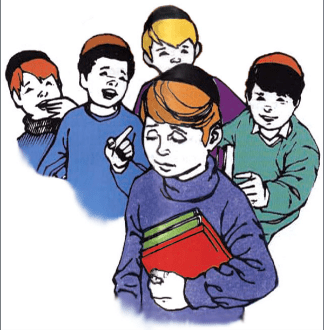
The Torah’s guidelines for judges can teach us an important lesson for human relationships. A judge may subconsciously favor one of the parties if he did a small, insignificant favor for him. We can apply this idea in our lives to help strengthen friendships or even start new friendships. We can calm someone who is angry at us and cause him to look at us more favorably. We can also use this strategy to encourage a bully to stop bothering us. We should do him a favor, or favors, or give him a gift. This will affect him subconsciously and we may become more favorable in his eyes.
May we be successful in our efforts to increase ahavas Yisroel by bringing more peace between ourselves and others. May Hashem see our efforts and end our galus quickly.


