Parshas Vayakhel-Pekudei
Just Try! You May Be Surprised…!
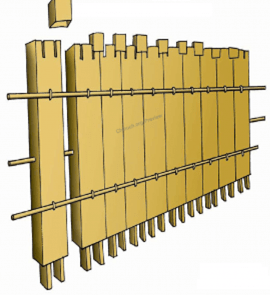
“They brought the Mishkan to Moshe, the Tent and all its vessels, its clasps, planks, bars, pillars, and sockets.” (Shmos 39:33)
Something unusual occurred once the parts of the Mishkan (Tabernacle) were completed. The Mishkan was ready to be set up. But Bnei Yisroel were unable to! Midrash Tanchuma (Pekudei 11:6) says that the Jewish People approached Moshe, showing him all the various parts of the Mishkan. “Moshe, our master, everything you told us we have done. Everything you asked us to bring and to give, we have given…. Perhaps we have overlooked something?” Moshe confirmed that everything was done perfectly. So why were Bnei Yisroel unable to set it up? Midrash Tanchuma answers that Moshe was distressed at not having been able to participate in the construction of the Mishkan. The work had been performed by Bezalel, Oholiav, and the wise-hearted. Because Moshe was distressed, Hashem concealed from Bnei Yisroel the secret of how to set up the Mishkan. Then Hashem gave Moshe the opportunity to set it up to enable him to participate in the construction of the Mishkan.
Midrash Rabbah (Bamidbar 12:9) points out that Moshe was actually very involved in the construction of the Mishkan. He was constantly teaching and supervising the artisans to ensure that everything was being done precisely as Hashem had commanded, without mistakes. That is why in Parshas Pekudei when the pasukim discuss the building of the different parts Mishkan, the pasukim all conclude that the work was done, “as Hashem had commanded Moshe”. That is, all the work was done precisely as Hashem had commanded Moshe. And Moshe made sure to teach the artisans exactly as it was supposed to be done.
The Midrash continues that, in fact, since Moshe put his heart and soul into this endeavor, the building of the Mishkan was attributed to him. The pasuk says, “On the day that Moshe finished setting up the Mishkan.” (Bamidbar 7:1). Rashi, quoting Midrash Tanchuma says that Betzalel and Ohaliav and the wise-hearted constructed the Mishkan. Yet it is attributed to Moshe because he put his heart and soul into it to ensure that it was done precisely as Hashem had shown him.
Sefer Lekach Tov (by Rabbi Yaakov Yisroel Beifus) cites Rabbi BenTzion Bamberger who asks a very insightful question. If Moshe was so involved in the Mishkan, so much so that it was attributed to him, what does it mean that Moshe felt pain because he did not participate in its construction? He did participate! Rabbi Bamberger answers that although Moshe was so involved, he did not have an active role of actually making something for this holy endeavor. That made him feel sad.
Sefer haChinuch (Mitzvah 16) discusses the importance of physical actions. We are influenced by our actions. Actions that we do create a permanent imprint on our hearts. Even if a wicked person would learn Torah and do mitzvos for selfish reasons (lo lishma), those actions would help veer him towards good.
We see the importance of doing physical actions. Although Moshe was very involved supervising the construction of the Mishkan, he did not have an active part in physically building it. That is why Moshe felt distressed. That is why Hashem arranged for Moshe to set up the Mishkan.
Hashem told Moshe that he should set up the Mishkan. Rashi says that Moshe questioned Hashem. Moshe wondered how it could be possible for a human being to set up the Mishkan? Hashem responded that Moshe should put his hands on the boards of the Mishkan and it would appear as if he set it up by himself. In reality, Hashem was going to set it up.
Rav Avrohom Pam zt”l (Messages From Rav Pam by Rabbi Sholom Smith) learns a beautiful and important lesson from this Rashi. A person must ALWAYS try. Sometimes one feels that a certain undertaking is impossible. And he may have good reasons as to why it seems impossible. Because of that feeling, one might not even try. We see from this that we must always try! We must start the process and often Hashem will help us succeed even though we had thought that it was impossible. Many worthy organizations and Torah institutions are in existence because someone tried to do the “impossible”!
A great example of this is the story of Pharoah’s daughter. She heard the sound of baby Moshe who was floating in a basket in the Nile River, far from her. Yet she put in an impossible effort! She stretched out her hand. Hashem did the rest and miraculously extended her hand temporarily so that it reached Moshe’s basket.
Rabbi Yekusiel Yehudah Halberstam zt”l, The Klausenberger Rebbe, went through the horrors of the Holocaust, losing his wife and all of his 11children. Afterwards, he went to Eretz Yisroel where he established the religious neighborhood of Kiryat Sanz. He also established an orphanage and a hospital, as well as schools and yeshivos in Israel as well as in the United States. He once approached someone to ask for financial help for one of his projects. The man responded, “I am sorry, but I just can’t.” The Rebbe told the man that when he was the Rav in the city of Klausenberg, he thought that he couldn’t carry his own tallis and tefillin. His attendant carried it for him. However, during the Holocaust, the Nazis forced him to carry 50 kilo bags of cement up and down a hill for 15 hours a day without being given food or water. The Rebbe said, “Oy, did I find out what I was really capable of. One should never say, ‘I just can’t do it’. A person has no idea what he is really capable of doing. During the war, I used all that hidden strength for the Nazis. Now, I am using that same hidden strength that I discovered to build worlds.” (Rabbi Elchonon Jacobovitz on Vayemain)
We should never feel that any task is impossible. We should just try to do our best. Often Hashem will make our efforts succeed! What we had thought would be impossible, may well become a reality! Our efforts can make a difference in the lives of many people!


