Parshas Vayechi
You Are Just Like Sheep!
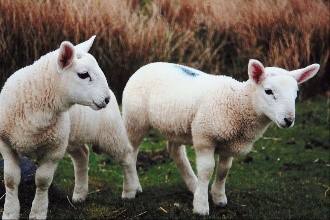
“…Hashem Who has been my shepherd all my life” (Bereishis 48:15).
I must share this fascinating story with you.
In one of the most famous chapters of Tehillim, Dovid HaMelech, King David says, “Hashem is my shepherd, I shall not want.” (Tehillim 23:1) Rashi says that Dovid HaMelech was saying that Hashem is my shepherd in this desert where I am going, therefore I am confident that I will lack nothing.
The Yalkut Shimoni quotes Rabbi Chama son of Chanina who says that in those times, herding sheep was among the lowliest and disgusting of professions. The shepherd was all alone. His sleep was disturbed as he always had to be aware of protecting the sheep. He had to be with the sheep in the heat of the summer and the cold of the winter. Thus, it was an insult to call Hashem a shepherd. So, how could Dovid HaMelech compare Hashem to a shepherd? Wasn’t that disrespectful?
The Yalkut Shimoni answers that Dovid HaMelech had a precedent as a justification for doing so. Our forefather Yaakov had already called Hashem a shepherd. Therefore, it was okay for Dovid HaMelech to do so. Yaakov had referred to Hashem as a shepherd when he was on his deathbed and was blessing Ephraim and Menashe, “…Hashem Who has been my shepherd all my life” (Bereishis 48:15).
The Yalkut Shimoni implies that Yaakov’s calling Hashem a shepherd was an unusual expression. It was never used before. Why did Yaakov do so?
Rabbi Yissocher Frand quotes an answer from Rav Matisyahu Solomon zt”l. In Parshas VaYigash, Pharoah had asked Yaakov how old he was. Yaakov answered that he was 130 years old. But then Yaakov added something that Pharaoh did not explicitly ask. “Few and bad have been the days of the years of my life, and they have not reached the life spans of my forefathers in the days of their sojourns.” (Bereishis 47:8-9) The Ramban points out that Pharoah’s question to Yaakov was somewhat inappropriate. Is that the first question that Pharoah should ask the first time that he meets a distinguished foreign guest, the father of his Viceroy? Yaakov’s response is even more puzzling. Why does he complain to Pharoah? Furthermore, how does Yaakov even know that he won’t live as long as his forefathers?
The Ramban answers that Yaakov was explaining rather than complaining. Yaakov appeared exceedingly old, well beyond his actual age. Pharoah was astonished to see such an old looking man, because most people in that era did not live so long. Pharoah was startled at the peculiar sight and without thinking, he blurted out “How old are you?” Yaakov explained that he was not as old as he looked. He looked much older than he was because he had such a hard life.
The Da’as Ze’kanim m’Ba’alei Tosefos says that even though Yaakov was just explaining why he looked so old, still, it was not proper for him to say, “Few and bad have been the days of the years of my life.” A Jew is not supposed to talk like that. Hashem responded, “You are complaining about your life? I saved you from Eisav and from Lavan. I returned Dina to you. I returned Yosef to you. How dare you complain that your years are few and bad?” Accordingly, the number of words that Yaakov uttered in this complaint (33 words) was deducted from his lifespan (33 years).
Rav Matisyahu Solomon zt”l explains that now, 17 years later, when Yaakov was on his deathbed, he was making a cheshbon hanefesh, an accounting for his soul. He reviewed the events of his life. He recalled his earlier statement to Pharoah. Now, he understood that it was not right for him to have said that. He realized, in retrospect, that all that he had imagined was bad and bitter was in the end all for his benefit. Looking back on his life, Yaakov realized that Hashem was watching over him the entire time. Hashem was never cruel or mean to him. Hashem was guiding him and watching over him all along. Hashem was always interested in doing what was best for Yaakov.
At this moment, Yaakov first saw Hashem as his shepherd. There are times when the sheep want to take an extra drink of water or to graze a little longer in a particular spot, but the shepherd does not let it. The sheep can’t figure out why but the shepherd knows that it is a dangerous place and forces the sheep to move on. Sometimes when the sheep strays from the flock, the shepherd comes and chases it back because he sees the wolf that is lurking in the background. Sometimes the shepherd even hits the sheep with his staff. All the while, the shepherd is protecting the sheep, but the sheep does not always understand why the shepherd is acting this way. On his deathbed, Yaakov comprehended what Hashem had done to him. Hashem was Yaakov’s Shepherd and always had Yaakov’s best interests at heart. Before this revelation, Yaakov was like the sheep who did not understand what their shepherd was doing.
It is interesting to note that in the pasuk (48:15) where Yaakov calls Hashem his Shepherd, the Hebrew word for shepherd is not spelled in its full form but is spelled without the vov, ”הָאֱלֹקִים הָרֹעֶה אֹתִי מֵעוֹדִי עַדהַיוֹם הַזֶה…”. It is as if the word written was ” הָרָעָה” which means ‘bad’. Both words are related to each other. That which one perceives as bad, is actually what the Shepherd, in His infinite wisdom and foresight, knows is best for us.
This insight, which Yaakov Avinu gained on his deathbed, enabled him to be the first person to call the Master of the Universe a Shepherd. And this was a precedent for Dovid HaMelech to use the very same metaphor in Tehillim.
We can learn 2 things from this. Firstly, Hashem always looks out for our good. Hashem, like a shepherd, sees the big picture. Hashem knows what is truly best for us.
Like sheep, we only see what is in front of us. We don’t see the big picture.
Secondly, we have a mitzvah to emulate any attribute that Hashem demonstrates to us (Devorim 28:9). Hashem empathizes and cares about others. We need to do the same.
We must think about others. We must notice the needs of others and do what we can to help them.
(based on Rabbi Yissocher Frand on Torah.org)


