Shavous-Special Issue
More Precious Than…
“Blessed is He, our G-d, Who created us for His glory, separated us from those who go astray, gave us the Torah of truth, and implanted eternal life within us.”
As we approach the Yom Tov of Shavuos, we remember the momentous day when we received the Torah. Three million Jews, as well as the souls of all future Jews, saw the Glory of Hashem as Hashem gave us the special gift of the Torah. Torah is more than a subject to study. It is the essence and very purpose of our lives. Learning Torah forges a close bond between us and Hashem. Throughout history, Klal Yisroel has displayed incredible mesirus nefesh, self-sacrifice, for Torah, sacrificing comfort, wealth, and even safety because they understood that Torah is more precious than all the gold and silver in the world.
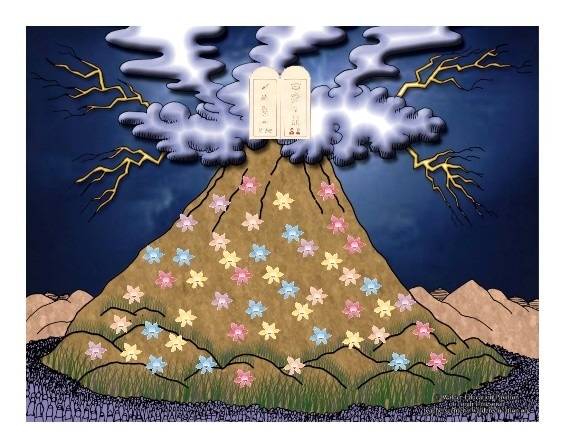
The Talmud (Shabbos 88A) tells a story of Rava, the illustrious Talmudic sage. Once, when he was deeply immersed in his learning, he was squeezing his fingers beneath his leg and was unaware that his fingers were bleeding. A heretic passed by. Noticing what was happening, he criticized Rava for not being aware that his fingers were bleeding. Indeed, how could Rava have been unaware of that fact? Rabbeinu Bachya (Devarim 26:16) says that all of us can visualize kabbalas HaTorah, the day that we received the Torah, with all its grandeur! We can experience the thunder and lightning, the loud blast of the shofar, the fire and smoke, and the voice of Hashem speaking to us. Someone who was experiencing such a revelation would be oblivious if he stubbed his toe. Similarly, Rava learned Torah with such intensity that he was experiencing a reenactment of kabalas HaTorah! That is why he didn’t notice that his fingers were bleeding.
The Talmud (Nedarim 81) says that after the destruction of the First Beis HaMikdash, Jerusalem was laid desolate. The sages and prophets could not understand why the land was laid waste, until Hashem told them. The reason was, “Because they have forsaken My Torah” (Yirmiyahu 9:12).
Many commentaries ask, if the reason was that the Jews forsook the Torah, why didn’t the sages realize that? The Talmud answers that the Jews did not abandon the Torah! They did learn Torah! However, they did not recite the blessings on the Torah before they learned the Torah.
If that was true that they just left out the brachos, why was that considered forsaking the Torah? Rav Nissim ben Reuven of Girona (1320 -1376), the Ran, explains that that Hashem saw in their hearts that they did not attach enough importance to the Torah. That is why they did not say the bracha before learning.
Rabbi Yissocher Frand says that the Jews did not appreciate what Torah is. Torah is not just another subject to study. It is a special gift that changes a person. It makes one a kinder and more considerate human being. It teaches morality and nobility. However, if you don’t appreciate what you have, then it is as if you don’t have it. This is also true according to halacha. An example is, Reuven bought metal, thinking that it was lead and then sold it to Shimon. Shimon cleaned it and realized that it was silver. Reuven wanted Shimon to pay him more money since Shimon now had a more valuable piece of metal. According to halacha, Shimon does not have to pay Reuven the extra money. The reason is that he thought it was lead and if one does not realize what he has it is as if he did not own it.
Similarly, if the Jewish People did not appreciate the Torah, it was as if they did not have it.
The Talmud (Pesachim 68B) says that every year on Shavuos, the sage, Rav Yosef, would eat a very special meal. Why? Rav Yosef explained the reason for this lavish celebration. On Shavuos the Jewish People received the Torah. He said that if not for the Torah, he would be like a regular person in the marketplace, indistinguishable from everyone! He was who he was, a different person, because of the Torah.
We should think about this and appreciate the gift of the Torah that we have. It distinguishes us from all other people. The contrast is so stark when you view how the current society has fallen apart. Society has a lack of morals, a lack of meaningful values, the lack of family values, the lack of modesty in dress…. Contrast that with the nobility of one who learns Torah.
On Shavuos we read the Megillah of Rus. Naomi was about to return to Eretz Yisroel, poverty stricken. Rus and Orpah had to decide whether they were going with Naomi. Both Rus and Naomi were princesses. To return home meant to return to wealth. Orpah made the logical decision and returned home. Rus remained with Naomi. Why? Rus concluded that a life without Torah was meaningless. She gave up money and power, choosing to live a meaningful Torah life.
Rus went in one direction, making a decision which shaped her whole life thereafter. She became the the great-grandmother of Dovid HaMelech. Orpah went on a different path.?
Why did Rus and Orpah choose entirely different paths in life? Rav Moshe Schwab, zt”l, said that Orpah viewed the life that Rus was about to choose, as involving too much mesiras nefesh, self-sacrifice. She was not willing to make that sacrifice. She felt it would be too hard of a life. She returned to what she perceived to be an easier life. Rus, on the other hand, was willing to choose that which seemed like a difficult choice at the time. Rus led a much more noble and rewarding life. Rus became the great-grandmother of Dovid HaMelech and the ancestress of Moshiach.
We have purpose to our lives because we have the Torah. Our lives are so much richer than those who do not have Torah. This is what Rav Yosef was saying that where would he be and where would we all be without the Torah? This is the approach that we need to think about before Shavuos. We should remember what we say in the וּבָא לְצִיּוֹן, u’va l’tzion, prayer. “בָּרוּךְ (הוּא) אֱלֹקֵינוּ, שֶׁבְּרָאָֽנוּ לִכְבוֹדוֹ, וְהִבְדִּילָֽנוּ מִן הַתּוֹעִים, וְנָֽתַן לָֽנוּ תּוֹרַת אֱמֶת, וְחַיֵּי עוֹלָם נָטַע בְּתוֹכֵֽנוּ”
“Blessed is He, our G-d, Who created us for His glory, separated us from those who go astray, gave us the Torah of truth, and implanted eternal life within us.”
(Based in part on Rabbi Yissocher Frand’s divrei Torah)