Category Archives: Sefer Bereishis

Parshas Vayishlach: Our Not So Secret Weapon for Victory

Parshas Vayishlach

Our Not So Secret Weapon for Victory


“And Yaakov was left alone, and a man wrestled with him until dawn.” (Bereishis 32:25)

In this week’s Parsha, we have the famous wrestling match between Yaakov and a stranger. Rashi says that this stranger was the guardian angel of Esav. Each nation has its “guardian angel” and this was Esav’s angel. The commentaries also explain that the guardian angel of Esav is the same as Satan and the Evil Inclination – They are all ONE and attempt to turn us away from serving Hashem.

The Chofetz Chaim poses a very interesting question. Why did Esav’s guardian angel wait so long before his attack; Why didn’t he fight against Avraham or Yitzchok? Why did he first attack Yaakov?

The Chofetz Chaim says, we know that Avraham was the pillar of chesed, of kindness. Yitzchok was the pillar of service to Hashem. Yaakov was the pillar of Torah. Satan could tolerate the kindness of Avraham and the service to Hashem of Yitzchok. However, Yaakov ‘s Torah could not be tolerated. Yaakov had to be attacked to fight this terrible threat to Satan.

We are all aware of the importance of chesed and service to Hashem. We see from the Chofetz Chaim, the vital importance of learning Torah. It is our Torah learning that combats and counteracts Satan’s attempts to drag us down, spiritually. When we strengthen our Torah learning we weaken Satan.

During the Roman control of the Land of Israel, they forbade the performance of many mitzvos. They outlawed the teaching and learning of Torah. Rabbi Akiva ignored the edict. He was eventually caught and tortured to death. When his students asked him to stop his Torah learning, he told them a parable. A fox was sitting by the seashore, observing the fish swimming to and fro. He asked the fish what they were doing. They replied that they were swimming in different directions to escape the fishermen’s nets. The crafty fox told them to come to dry land where they will be saved from the nets. The fish laughed at the fox’s silly idea saying that if we come ashore we will certainly die. We must be in the water to live. We will just keep trying to avoid the fishermen’s nets. Rabbi Akiva said that just as fish need water to live, so too do Jews need Torah to live. Torah is our source of life.

We should all try to increase our Torah learning as much as we can.
That will bring us closer to Hashem and will weaken our adversary and enemy, Satan.
Parshas Vayetzei: Priceless!

Parshas Vayetzei

Priceless!


“Yaakov kissed Rochel and lifted his voice and cried.” (Bereishis 29:11)

Yaakov arrived in Padan Aram and met his future wife, Rochel, for the first time. His initial reaction was surprising – he cried. Why?

Rashi explains, Yaakov felt bad that he had arrived empty-handed, without jewelry and presents to give to Rochel. Why was he empty-handed? Esav had sent his son, Elifaz, to catch Yaakov and kill him. Elifaz had grown up under the positive influence of his grandfather, Yitzchak, and couldn’t bring himself to commit murder. Elifaz asked Yaakov if there was any way he could possibly fulfill his father’s wishes to do the mitzvah of kibud av. Yaakov advised him to take-away his wealth, as a poor person, in some way, is considered dead (since he can’t support himself properly or help others). In this way it would be as if Elifaz followed his father’s wishes and killed Yaakov.

The Rabbainu Tam from Orleans asked, if a father tells a child to sin, the child is not obligated to listen. If so, why did Elifaz bother to look for a way to fulfill his father’s wishes? He wasn’t obligated to fulfill them?

Rabbainu Elyakim answers that Elifaz asked Yaakov if there was any possible way to fulfill his father’s wishes, without acting against the Torah.

We see the appreciation Elifaz had for the value of a mitzvah. He could have ignored his father’s request, which was against the Torah. Instead, he tried to find a way to fulfill his father’s wishes in a permissible way.

Harav Henach Leibowitz zt”l highlights another very interesting point from this: Observe Yaakov’s actions. He was willing to give away all his money to enable another person to fulfill some small part of a mitzvah.

Rabbi Pesach Krohn has an interesting story about the value of a mitzvah.

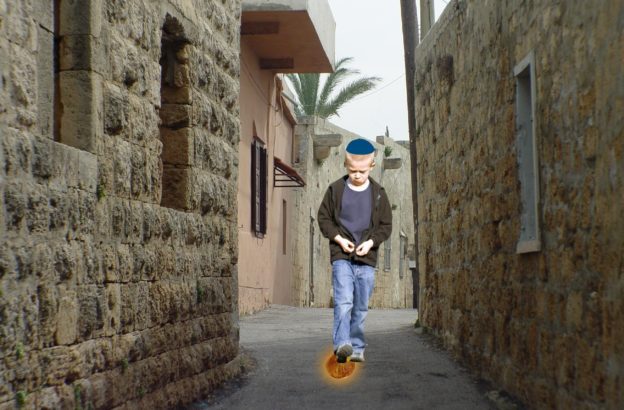
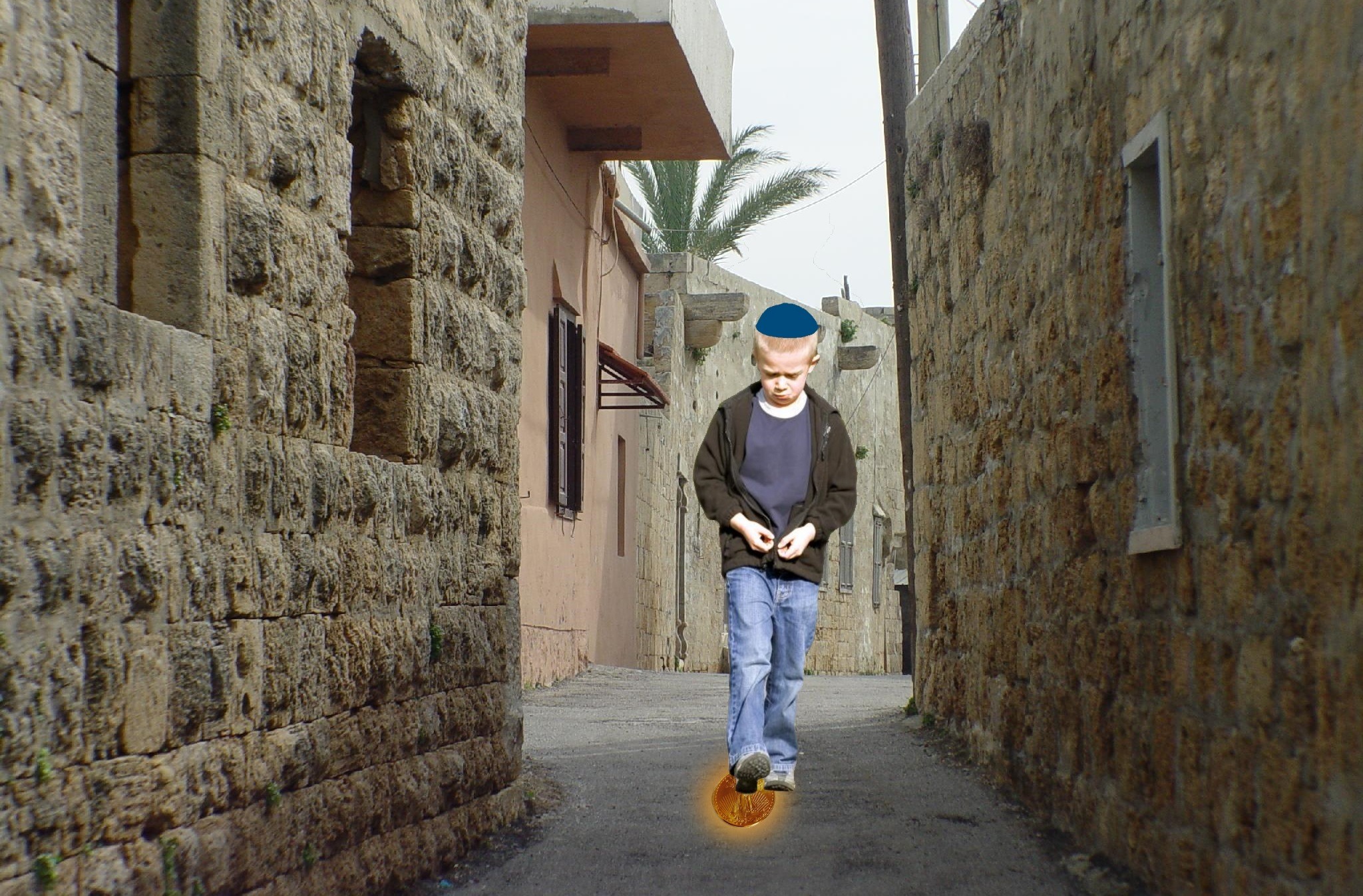
Once there was a young boy who grew up in a very poor family, in Israel. One afternoon he went walking and noticed a gold coin on the street. The coin was so valuable that it could have provided this boy’s family food for an entire month. However, it was Shabbos, so the boy could not pick up the coin. He put his foot on the coin, determined to remain that wait until Shabbos ended, when he would be permitted to take the coin. He waited that way for a few hours until an Arab youth pushed him off the spot and took the coin. The Jewish child was devastated. When the boy’s rav heard what had happened, he asked the boy to come to his house after Shabbos. When he did, the rav took a gold coin, just like the one that the boy had found, out of his desk drawer. He offered the coin to the boy. In exchange he wanted the boy to give him his reward for keeping Shabbos despite the great temptation of a large sum of money. The boy thought for a moment and said, “If the reward for my mitzvah is so great (that the rav offered a valuable gold for it) then it is not for sale”. Whereupon the boy left the rav’s house with a greater appreciation of the value of a mitzvah.

The reward for each and every mitzvah that we do is priceless, beyond our imagination.

Parshas Toldos: If At First You Don’t Succeed, Try Again!

Parshas Toldos

If At First You Don’t Succeed, Try Again!


“And Yitzchok’s servants dug… and found a well of water. And the herdsmen of Grerar… said, ‘the water is ours’…. And Yiztchok’s servant dug another well, and they also fought over that… And Yitzchok’s servants dug another well, and the herdsmen of Grerar didn’t fight over that.” (Bereishis 26:19-22)

Yitzchak’s servants dug in the valley and found there a well of fresh water.

The psukim here are puzzling. First the Torah tells us that Yitzchok dug a few times until he found water. When the ownership of those wells was disputed, he dug others until he found water. Why does the Torah give a lengthy description of Yitzchok‘s attempts to find water?

The Chofetz Chaim explains that the Torah is teaching us a very important lesson from this:

NEVER GIVE UP! When you start something, don’t give up because you run into difficulties. This applies to both material and spiritual matters. Be persistent when things don’t go the way you want. If at first, a business venture doesn’t work as planned, don’t give up, right away. Try again. If learning Torah is difficult at first, don’t give up! Keep trying and persisting. Often, the reason for failure is that you gave up too soon. If you are determined and keep trying, there is a greater likelihood you will succeed.

Many of the most successful people in the world, whether they are businessmen, sports figures, or just ordinary people all encountered difficulties before their accomplishments. Had they given-up after their initial failure, they would not have achieved their triumphs.

In the early 1800’s, there was a young boy who was not trying hard enough in Yeshiva. His parents tried, without success, to encourage him to put more effort into his Torah learning. Finally, in despair, the boy’s parents decided to take their son out of Yeshiva and send him to learn a trade. When their son overheard what they said, he burst out crying and begged for one more chance. He was given the chance, became more serious, and learned very well. This boy became the great Torah luminary known as Rav Naftoli Tzvi Yehudah Berlin; the Netziv. The Netziv was Rosh Yeshiva of the famed Volozhin Yeshiva for almost 40 Years!

NEVER GIVE UP! YOU CAN SUCCEED IF YOU KEEP TRYING!

Parshas Chayei Sarah: I Am Sorry I “Bothered” to Help You!

Parshas Chayei Sarah

I Am Sorry I “Bothered” to Help You!


“And Avraham rose up from before his dead…” (Bereishis 23:3)

The Midrash describes a fascinating event. While Avraham was mourning for Sarah, Satan appeared before him to battle against him. “You [Avraham] caused Sarah’s death!” “Had you not brought Yitzchak to be sacrificed, your wife, Sarah, would still be alive!” Satan blamed Avraham for the untimely death of Sarah!

What was Satan’s goal in saying this to Avraham? He wanted Avraham to feel personal guilt for Sarah’s untimely death. He wanted Avraham to regret that he brought Yitzchak to be sacrificed.

As soon as this happened, Avraham stopped sitting shiva for his wife! Avraham was concerned that if he would continue to mourn for Sarah, he may begin to believe the claim of Satan that he was responsible for his wife’s death.

This Midrash is astonishing. How could Avraham possibly have felt regret for what he did? He happily went to fulfill Hashem’s request. Certainly, he felt joy after passing this test of faith and receiving a multitude of eternal blessings from Hashem. “…I will surely bless you and greatly increase your offspring like the stars of the heavens and like the sand on the seashore; and your offspring will inherit the gate of its enemy. And all the nations of the earth shall bless themselves by your offspring…”. The magnitude of these blessings clearly proved that Avraham acted correctly in bringing his son to be sacrificed. [Hashem never intended him to sacrifice his son but merely to show his willingness to do so].

Furthermore, Avraham totally believed that everything that occurs is from Hashem. It was clearly Sarah’s time to die. Her death had nothing to do with the news that Yitzchak was almost sacrificed. Otherwise Hashem would not have allowed it to happen.

Rav Henach Leibowitz zt”l explained, that even though Satan’s claim was baseless and foolish, during Avraham’s period of sadness and internal turmoil over his wife’s death, there was the slimmest of possibilities that Satan’s words would affect him ever so slightly. This could have resulted in an ever so slight feeling of regret for what he did. Therefore, Avraham stopped doing the mitzvah of sitting shiva to ensure that Satan would not gain a foothold into attempting to make him regret his actions.

Satan is our worst enemy, devising numerous battle plans against us. First, he tries to stop us from doing a mitzvah. He tried to stop Avraham from going to sacrifice Yitzchak by asking him, “Are you certain that Hashem made this request? Maybe you imagined it?” When that wasn’t successful, Satan turned himself into a river to try to block Avraham from going. That too didn’t work.

Satan’s next tactic is to make us feel regret for doing the mitzvah to minimize the reward we receive for that mitzvah. Satan tried to minimize Avraham’s great reward by attempting to make him feel a twinge of regret for his action. Avraham was so concerned lest this monumental mitzvah be diminished, that he stopped sitting shiva for Sarah.

We must constantly be on guard against the wily Satan, both before and after doing a mitzvah. How many times do we do a mitzvah but regret it afterwards? I opened my home to you, but you didn’t show me appreciation – I am sorry I welcomed you; I helped you, but you didn’t say thank you – I am sorry I helped you. The regret we feel afterwards takes away something from the value of the mitzvah.

We must be especially careful when we are sad or upset to be on guard against Satan.
We must cherish our mitzvos and never regret doing them.

Based in part from Sefer Chidushei Halev by Rabbi Binyamin Luban

Parshas Vayeira: Save the Other Half of the Blanket!

Parshas Vayeira

Save the Other Half of the Blanket!


“And Hashem appeared to him [Avraham] in the Plains of Mamre…” (Bereishis 18:1)

Rashi is bothered by the following question: Why was it necessary for the Torah to specify that Hashem appeared to Avraham in the Plains of Mamre? We already know from last week’s parsha where Avraham was!

Rashi answers that the Torah wanted to give Mamre special mention and special credit for advising Avram about the Bris Mila.

The Da’as Zekanim quotes a Midrash that asks, how is it possible that such a great tzadik, as Avraham, who passed all of Hashem’s tests without needing advice, should suddenly need advice when it came to doing the Bris Mila?

The Da’as Zekanim answers that Avraham was not asking for advice if he should do the Bris Mila. Certainly, he would do it. He just wanted a suggestion how to encourage his household to perform this special mitzvah since they had initially refused (Hashem had commanded that Avraham, his family, and his household perform a Bris Mila). Mamre advised Avraham that first he should perform the Bris Mila on himself and his son Yishmael. When Avraham’s household would see that he did it, they too would follow suit. The suggestion worked, and they accepted the mitzvah of Bris Mila upon themselves.

We see a beautiful lesson from this Midrash: To encourage a specific action, teach by example. Don’t ask someone to act one way while you, yourself, act the opposite.

The way to teach a child to act with respect, to love mitzvos, to pray with concentration… is by setting an example and acting that way ourselves.

A couple was once discussing what to do with an elderly parent who lived with them and they no longer wanted to “bother” to care for. They decided to send him to a nursing home, along with a special, warm blanket. Their young son, hearing their decision, burst into the room, unhappily. He loved his grandfather and was unhappy with their decision. He told his parents to save one half of the blanket. When his parents questioned him, he explained that he wanted to have something to give them when they got old and he sent them away.

What a powerful, negative lesson this boy’s parents were teaching him through their example. What a powerful lesson the son was teaching them with his response.

What message are we sending to others by our actions? Are we asking them to act one way while we act differently?

As parents, what lessons and messages do we want to give to our children? Do we want them to act one way while we, ourselves, at times, act in just the opposite way?

We teach by example. May Hashem bless us with family and friends who follow the proper example and remain on the true path of closeness with Hashem.

Parshas Lech Lecha: Leave Before It’s Too Late!

Parshas Lech Lecha

Leave Before It’s Too Late!


“Leave your country, your birthplace, and your family and go to the land that I will show you.” (Bereishis 12:1)

Hashem told Avram to leave his “land”, his “birthplace”, and his “father’s house” to go to the land that he will be shown (the Land of Israel).

Rav Ovadia of Bartenura says that there seems to be extra words in the pasuk; The purpose of Hashem’s request was for Avram to go to a specific place. Why was it necessary to highlight where and what Avram was leaving?

Rav Ovadia answers that the Torah is emphasizing the three groups that necessitated Avram’s departure. A person is influenced by his countrymen, his relatives, and his immediate family. Hashem wanted Avram to leave-behind these negative influences on his faith in Hashem.

The Rosh HaYeshiva of Yeshivas Chofetz Chaim, Rav A. Henach Leibowitz, added a very insightful and meaningful commentary on Rav Ovadia’s explanation:

Avram was the paradigm of faith in Hashem. He recognized Hashem at the age of three. He introduced a belief in one G-D into the World. He broke his father’s idols. He chose to be thrown into a fiery furnace rather than to give up his beliefs.

Avram was on such a high level of faith, yet his faith was still in danger from the negative influences in his hometown. Avram had to leave.

What kind of people was Hashem afraid would influence Avram? Murderous enemies! Avram’s countrymen, relatives, and family were all against his beliefs and were responsible for his being thrown into a fiery furnace. Could such people have an influence on Avram who had such strong faith in Hashem?

The answer is YES! Rabbi Leibowitz said that this is the lesson that Rav Ovadia of Bartunura is teaching us. Even a great person can be affected by society – even when the society is against him. How much more so could we, who are not on the level of our Forefather Avram, be affected by our society (especially when our society is not against us, but beckons to us). Many of our society’s values and morals are against the Torah, yet they subtly and passively enter our hearts.

The British have a reputation for being “proper” and “civilized”. A British man was once shipwrecked on an island inhabited by cannibals (people who eat human flesh). After being on the island for a while (for some reason this British man was not “invited to dinner”), the eating habits that seemed disgusting and abominable became acceptable!

We are influenced by our environment! That is why it is so important for us to carefully choose our friends and the neighborhood in which to live.

Parshas Noach: Feel The Pain!

Parshas Noach

Feel The Pain!


“Take for yourself every food that is eaten…” (Bereishis 6:21)

The people of Noach’s generation were extremely wicked. They refused to repent and were soon to be destroyed by a world-wide flood. Noach, his family, and some animals would be saved in the Ark. Hashem told Noach to gather all types of food and “it shall be for you and them (your family and the animal’s) to eat”.

Clearly this phrase seems to be unnecessary – of course the purpose of the food is to eat!

Rav Elchonon Wasserman in his sefer Kovetz Ma’marim, gives a beautiful explanation:

The Midrash describes what the world was like before the flood. People were healthier and stronger. The climate was perfect, and the earth was so fertile that planting occurred only once every forty years. The fruit was also superior in taste and smell. Noach, who was a prophet, knew that after the Flood the earth would not be the same and the food would not be of the same superior quality. He may have wanted to take extra food (of this superior quality) to store for use after the Flood (just as Yosef had stored food, preparing for years of famine).

Therefore, Hashem told Noach to take only enough food that both he and the animals needed to eat in the Ark. He was forbidden to take extra food to eat for after he exited the Ark. Why? When others suffer, even deservedly, (people were killed by the flood) we must feel their pain and not look to satisfy our own personal pleasure.

In 1895 a fire destroyed many homes in Brisk. Rav Chaim Soloveitchik refused to sleep at home. Instead, he slept on the floor in a side room of a shul. He said, “I am not able to sleep in a bed when so many people do not have even a roof over their heads”. Rav Chaim felt it was inappropriate to sleep in his own bed while his fellow Jews were in such discomfort.

One bitterly cold night, Rabbi Eliyahu Chaim Meisel went to visit the wealthiest Jew in in the town of Lodz. Rav Chaim knocked on his door, and the wealthy man invited him in. Rav Chaim stayed outdoors for a few minutes, while he was carrying on a casual conversation. Meanwhile, the wealthy man was shivering terribly from the cold. Only after the wealthy man’s teeth started chattering and his lips started turning purple from the cold, did Rav Chaim accept his invitation inside. Rav Chaim wanted him to feel the frigid cold before requesting a donation for warm clothes for his yeshiva students and money to heat their Study Hall. Rav Chaim felt that one can better appreciate another’s pain when he experiences some of it himself.

When the Jewish People were enslaved in Egypt, Hashem wanted to share their pain. Hashem placed sapphire bricks under His Heavenly Throne to serve as a constant reminder of the bricks that the Jews were forced to make.

The Jewish People are One Nation. When Jews are in pain, when Jews in our community are undergoing difficulties, or when tragic events are occurring to Jews in Eretz Yisroel are we feeling their pain? What more can we do to feel their pain??

Based on a dvar Torah by Rabbi Zelig Pliskin

Parshas Bereishis: DON’T Be A First RESPONDer!

Parshas Bereishis

DON’T Be A First RESPONDer!


“And Hashem made the two luminaries. The larger one to dominate the day and the smaller one to dominate the night…” (Bereishis 1:16)

A woman who had been married for a number of years was still waiting to have her first child. She went to a rav for a bracha. He told her to find someone who had been insulted and restrained himself from responding. Such a person’s bracha would be very powerful. A few years later, at a wedding, she witnessed another woman being publicly embarrassed. Quickly, she begged the woman not to respond to the insult. “Please don’t respond. I will explain my reason to you later”. The woman listened to her and didn’t respond. She explained her reasoning and asked the woman to give her a bracha that she should have a child. She did so and a year later a child was born. I am personally aware of another circumstance when the bracha of a person who restrained herself from responding to an insult, came true (Hashem, of course, grants the bracha only when it is also in the person’s best interest).

The pasuk says that on the fourth day of Creation, Hashem created the two LARGE luminaries in the sky. Hashem created the Large one, the sun, to illuminate the day and the SMALL one, the moon, to illuminate the night.

Rashi is bothered by the obvious question: First the pasuk describes both the sun and moon as being large. Then the pasuk describes the sun as being large and the moon as being small. What happened? Why does it seem that the moon was initially as large as the sun but then became small?

Rashi explains what had occurred. Initially both the sun and moon were created large-the same size. The moon complained to Hashem- “It is not possible for two kings to both wear the same crown.” The moon inferred that there can only be one large luminary. Hashem validated the moon’s complaint and indicated that the moon should diminish itself. Clearly when the moon complained, it was hinting that the sun should be made smaller. Hashem told the moon, since you are the complainer, you will become smaller. Showing sensitivity to the sad feelings of the moon, Hashem then created the stars in the sky (like hosts of servants for the moon).

The Da’as Zekainim has a novel approach, explaining what had happened. The moon had a valid argument that two kings can’t wear the same crown and that one should be made smaller. Clearly the moon was hinting that the sun should be made smaller. That hint was a disgrace to the sun and THE SUN DID NOT RESPOND TO ITS DISGRACE. The sun was praised for being noble and showing inner strength by not responding. That is why the sun was rewarded by maintaining its size while the moon was diminished in size (According to this, the moon was not diminished because it initiated the complaint, as Rashi explained). One who acts in the manner of the sun – not responding to disgrace, is compared to the sun coming out in all its strength.

The pervading attitude, nowadays, is that we don’t want others to take advantage of us by stepping on us. We feel that we must immediately respond to criticism or insult. Maybe sometimes we do have to respond. However, clearly there are times that we should show restraint. That restraint is considered an act of strength and a manifestation of the greatness of a human being.

May Hashem grant us the wisdom to know when to ignore an insult and the strength to be able to do so.

Based on a dvar Torah by Rabbi A. Henach Leibowitz zt”l,
Rosh HaYeshiva of Yeshivas Chofetz Chaim

Parshas Vayechi: Maintaining The Proper Balance of Middos

Parshas Vayechi

MAINTAINING THE PROPER BALANCE OF MIDDOS


“[Yaakov said] cursed be their anger…I will divide them…and scatter them in Israel.” (Bereishis 49:7)

Before Yaakov died, he rebuked and blessed his children. He rebuked Shimon and Levi‘s trait of anger (not them). As we recall, when Shimon and Levi heard that Shechem had molested Dina, they acted with anger (without consulting Yaakov) and killed all the males that lived in the city (Due to their complicity in what Shechem did, all the males were deserving of the death penalty. However, Shimon and Levi should have first spoken to Yaakov, instead of acting on their own).  Shimon and Levi had also been the main instigators against Yosef (Yosef’s brothers had judged that Yosef should incur the death penalty. However, the brothers had mercy on him and sold him, instead). Yaakov now rebuked Shimon and Levi for acting upon their anger, in both instances.

Rashi Explains, Yaakov said that the tribes of Shimon and Levi will be scattered amongst the rest of the Jewish People. The purpose was to separate from each other people who exhibit this bad trait of anger.

The Chasam Sofer has a different approach: He explains that the anger itself (not the members of the tribes of Shimon and Levi) will be divided amongst the other tribes. Shimon and Levi over-reacted violently because of their anger. On the opposite extreme were the other tribes that didn’t react at all to help Dina. That too was wrong; they should have done something. Therefore, Yaakov said, I will divide the “anger” amongst the tribes, removing some of the anger from Shimon and Levi and giving it to the other tribes. That would give all the tribes the proper amount of anger (a minimal amount to all). Too much anger would be terrible – causing quarrels, hurt-feelings, pain and suffering. Too little anger would inhibit one from acting to protest injustice.

The Orchos Tzadikim, illustrates this concept beautifully: A person is preparing a dish consisting of vegetables, meat, water, salt, and pepper. From each of these ingredients he must take the proper amount. If he puts in too little meat it won’t be good, as will too much salt. The proper amount of each ingredient makes the tastiest dish and will prevent spoilage. The same idea applies to middos (character traits). If we have too little of a particular middah (character trait) when more is needed or if we have too much of a particular middah when less is needed, we will not be the best person we can and should be. Every trait is necessary. The only question is how much and in what situations it should be used.

Only after learning what the Torah says about each middah can we properly understand the proper amounts to use. The Torah is our only source of how to improve our character in the best-way possible.