Category Archives: Sefer Bamidbar

Parshas Chukas-Balak: Be Happy With What You Have While You Have It!

Parshas Chukas-Balak

Be Happy With What You Have While You Have It!


“All the Jewish People arrived at the wilderness of Tzin…. Miriam died there and was buried there…” (Bamidbar 20: 1,2)


Reuven and Sara Shapiro were brother and sister.  Reuven was 11 years old and Sara was 9. Early one morning they were awakened by the sound of their doorbell ringing. They ran to their bedroom window to see who was at the door. A truck driver looked up and told them that he had a delivery for them. Reuven and Sara noticed that his truck had huge pictures of cookies and doughnuts on it. They ran down and opened the door. [When I tell this story at JEP Shabbatons, I always warn the children that in real life, they should never open their door for a stranger]. The driver returned to his truck and brought in boxes and boxes, which he put down in the living room. Reuven and Sara started opening the boxes. They could not believe what they were looking at. There were doughnuts of every flavor along with all varieties of cookies, cakes, and pies. They called all their friends to join them in eating these yummy desserts. They shared it throughout the day. Early the next morning, they were awakened by the sound of a doorbell ringing. They ran to their bedroom window to see who was at the door. A truck driver looked up and told them that he had a delivery for them. Reuven and Sara noticed that his truck had huge pictures of games and electronics. The driver brought in boxes and boxes, which he put down in the living room. Reuven & Sara opened boxes full of the latest board and electronic games. They called all their friends to play with all the games.  Meanwhile, they finished eating the delicious cakes from the day before. The next morning, the same thing happened.  This time the truck driver delivered different flavors of ice cream together with frozen desserts. The routine repeated itself for two weeks. Each day, Reuven and Sara excitedly opened their front door. Two weeks later, Reuven had some friends sleeping over at his house. Early the next morning, the doorbell starting ringing. Reuven & Sara heard it and turned over in bed. Reuven’s friends went to the window and saw the truck outside. When they told Reuven, he yawned and told them to have the driver put the boxes in the living room.

What happened? Why weren’t Reuven & Sara excited about the delivery this time? The answer is that they were already used to it coming.  They expected it. Therefore, it was no longer special and exciting. Hashem delivers the greatest gift to us every single morning. Hashem gives us life, by returning our neshama, our soul daily. We should be excited beyond belief, every morning.  We should thank Hashem with excitement, each time.  But many of us do not. Why? We are used to it.  We expect it. It is not new to us, so the excitement has worn off.

The Jewish People, in the desert, had their needs miraculously taken care of. For forty years they received water daily, via a well that traveled with them. Three million people and their animals had their needs taken care of. Yet, not once in those 40 years does the Torah record that they showed appreciation for the miraculous well (Kli Yakar Bamidbar 21:17).

Furthermore, the Torah tells us (Bamidbar20:1) that Moshe’s sister, Miriam died. The very next pasuk says that the Jewish People no longer had water. Rashi connects these 2 psukim, teaching us that the well which supplied water for these 40 years was in the merit of Miriam.  When Miriam died, the well no longer provided the Jewish People with water. The Kli Yakar asks why the well stopped supplying water. He answers that it was as a punishment for the Jews’ lack of appreciation for Miriam. They did not fully appreciate her for the great person that she was and for the great merit that she had earned. Apparently, the Kli Yakar says, the Jews did not eulogize Miriam properly and her memory was quickly forgotten. [After Moshe and Aharon died, it says that the Jewish People cried. It does not say that after Miriam’s death.] As a result, the water stopped flowing. Then the Jewish People realized Miriam’s greatness and that they had received this miraculous source of water only in her merit.

When things are going well, we may tend to take these blessings for granted. We may not fully appreciate our good fortune, as we come to expect it. We may not thank Hashem, as we should, for each kindness that He bestows upon us. Sometimes, only after the blessing is taken away, do we fully appreciate it, retroactively. This trait of not fully appreciating what we have also applies to our relationships with people. Sometimes we do not fully appreciate our loved ones until they are no longer with us.


Be happy with what you have while you still have it! Do not wait until it is gone to appreciate it. Constantly thinking about all the good that Hashem does for you will help you to value it and not take it for granted. Also, do likewise and appreciate your loved ones while they are still with you.


Parshas Korach: I Don’t Agree With You! Let’s Fight!

Parshas Korach

I Don’t Agree With You! Let’s Fight!


“Moshe sent for Dosson and Aviram, sons of Eliav, and they said, ‘“We will not come!’” (Bamidbar 16:12)


I recently heard a story from Rabbi Dovid Ashear. A woman walked into a bakery in Israel, one erev Shabbos. As she was thinking about what to buy, the salesman told her that there was a special sale and she could get two cakes for the price of one. She liked the idea but said that she only needed one cake. He suggested that she give the second cake to someone else. She said she could give one to her sister, but she did not have the time to bring it to her. When the salesman heard where her sister lived, he said that he lived only a few blocks away and could deliver it for her. He wrote the name and the address. She wrote a note saying, “From your sister.  Have a great Shabbos!” After Shabbos, she was surprised that her sister did not call her to thank her for the cake. She called her sister and was surprised to hear that the cake had not been delivered. The next morning, she called the bakery to find out what had happened. The salesman said that he had delivered the cake to the address she had given him, to her sister on the first floor. She said, “But my sister lives on the third floor!” Apparently, there were two people at that address with the same last name and the cake was delivered to the “wrong” person. This woman got very curious and looked in the phone book for the phone number of the person who did get the cake. She called and asked the woman who answered the phone if she had a received a cake that erev Shabbos. There was a long pause and the sound of crying could be heard. When the woman composed herself, she said that what they got was more than just a cake. Apparently, her husband had not spoken to his sister for over 10 years because of a petty argument. When he saw the cake from “his” sister, he thought she wanted to make peace and renew the relationship. He called his sister to thank her. That phone call was the catalyst in bringing her husband and his sister back to a peaceful and loving relationship.

Machlokes, arguments are terrible. It can break apart friendships and loving relationships.

The verdict was in. He was guilty of murder.  The judge ordered that he be hung, together with his children, ages 8, 6, 2, and 5 months.

We would be astonished if we heard such a verdict. Why were the guilty man’s children also punished? They did not do anything! Yet, this is what occurred in this week’s Parsha. Korach instigated a machlokes, a dispute, against Moshe Rabbeinu. The catalyst of the dispute was jealousy. Korach wanted a prestigious position. He did not receive it because Hashem had told Moshe to give the position to someone else. Korach was very upset and rallied followers against Moshe. Korach claimed that since the entire Jewish People were holy, all had equal rights to get positions of leadership.  Moshe had no right to give all the leadership positions to those whom he chose. Korach denied that Hashem had told Moshe whom to appoint. Korach also mocked Moshe, falsely claiming that Moshe had made up certain mitzvos (see Rashi 16:1). This machlokes was exceedingly serious because it was more than an attack on Moshe.  It was an attack on Hashem and disputed the validity of the Torah.

The Chofetz Chaim zt”l (Sefer Shmiras Halashon, Shar Hazchira perek 15) discusses the severity of machlokes. It is destructive in terms of relationships as well as being spiritually destructive. It can lead to such serious sins as slander, jealousy, hatred, and even embarrassing a person in public. It is so serious that even young children are punished for their parent’s misdeeds. The Chofetz Chaim quotes the Midrash Tanchuma on this parsha showing how severe machlokes is. The Midrash points out that that the Heavenly Court does not punish a child until he is 20 years old. The Jewish courts do not punish a child until the age of bar or bas mitzvah. Yet, even babies that are one day old, are punished due to machlokes.

Dosson and Aviram, the other leaders of this dispute, stood outside their tents with their wives, children, and infants. They were arrogant and steadfast not to give-in to Moshe. Previously, they had told Moshe that they would not meet with Moshe to discuss their position. They said (Bamidbar 15:16), ”…Even if you gouge out our eyes [and blind us], we will not come!” Their refusal to end the machlokes resulted in their entire families – even the babies, being punished by being swallowed up by the earth.

The Chofetz Chaim says, we see that being involved in a machlokes harms one’s own children. Unfortunately, there are people who ignore that fact. A most unbelievable story about this occurred in the Chofetz Chaim’s own town of Radin (as quoted in Rabbi Frand on the Parshah). Two people got into a very heated argument, which got worse and worse. The children of those two people started mysteriously dying. The Chofetz Chaim approached one of the disputants, pleading with him to stop this machlokes. The Chofetz Chaim told the man that his involvement in the machlokes was causing the death of his children! Incredulously, the man refused to back down. He said that he was going to win the argument even if it meant that all his children would die as punishment!!

The Chofetz Chaim continues (Sefer Shmiras Halashon, Shar Hazchira perek 17) that you should not join a machlokes even to side with a close relative or even to side with your father! Even if your father is correct and the other person is in error, you should still not join the machlokes. [Obviously, if you are able, you should try to peacefully resolve and stop the machlokes.] The Midrash Yalkut Shimoni says that this is what saved Korach’s children from being punished and being swallowed up by the earth. They had initially joined their father in the machlokes against Moshe. They were sitting with their father when Moshe approached. They thought to themselves that if they would stand to show honor to Moshe it would be a disgrace to their father. That would be a problem since they had the mitzvah to honor their father. On the other hand, there was a mitzvah to stand for an elder and a Torah scholar.  They decided to stand to show honor to Moshe. At that moment they felt repentance in their hearts. They felt that this machlokes was wrong. Those feelings of repentance saved their lives.

Imagine the tremendous reward in store for one who ends strife and brings peace. Imagine if one of the people involved in the dispute will swallow his pride and apologize, even though he feels he is totally correct. The reward in store for him will be incalculable. He will also become a happier person when the dispute ends.

Rav Altar Henach Leibowitz zt”l highlights the obligation to try to stop a feud.  Moshe tried to end the feud by asking Dosson and Aviram, two of the leaders of the feud, to come to him (Bamidbar 16:12). They refused to come. So, Moshe went to them. Rashi quotes the Gemora (Sanhedrin page 110A) that Moshe’s actions teach us not to perpetuate a machlokes. Rashi in Sanhedrin adds that Moshe put aside his own honor, in his attempt to foster peace, by going to the home of the instigators. Rav Altar Henach Leibowitz explains that Moshe’s actions were not merely a praiseworthy action. Rather, he was fulfilling a halachic obligation! Had Moshe not gone, every second of delay would have been considered as if he had perpetuated the machlokes! He would have been going against the Torah that states “…One should not act like Korach and his company” (Bamidbar 17:5. See Rashi). One might have thought that it was beneath the dignity of Moshe, the leader of Klal Yisroel, to go seek out those had started a machlokes with him. We learn from this that Moshe acted properly and was even obligated to do what he had done.

No one benefits from machlokes. Often, machlokes starts from a minor and unimportant disagreement that grows and grows into a full-fledged feud. It adds physical stress which is not healthy for a person’s heart. It causes separation between loved ones. It can bring serious harm to one’s children. Furthermore, it is a sin to perpetuate a machlokes. In a machlokes, both sides share some of the blame. However, this machlokes was unique. Moshe was 100% correct! Korach was 100% wrong! If one who was totally right, could initiate an attempt to bring peace then certainly we, who are not 100% right, can initiate the attempt to bring peace.


Initiating peace is more than being nice; it is the halacha!

 

Parshas Shelach: Counterfeit Money!

Parshas Shelach

Counterfeit Money!


“Send men for you and they will spy out the Land of Canaan…” (Bamidbar 13:2)


Rav Simcha Zissel Ziv zt”l, the Alter of Kelm, has a beautiful parable. A Jew was taking a walk one Shabbos afternoon and noticed a thick wad of 100-ruble notes lying in the grass. His initial reaction was that it was Shabbos and it was forbidden to touch the money. His second reaction was to start rationalizing. After all, he was poor and could really benefit from this money. He owed money to the grocer and the butcher and to his childrens’ teachers. Then he started rationalizing even more. It would even be a mitzvah to pick up the money! His thought process went from one extreme to the other. First, he felt that it was forbidden to pick up the money. He eventually felt that it was even meritorious to pick up the money. He was about to pick up the money when another Jew passed by and bent down to look at the money. He turned to the first Jew and exclaimed, “What are you looking at? Don’t you realize that the money is counterfeit?”  Had the first Jew picked up the money and then found out that it was counterfeit, he would have felt terrible. Once the temptation was no longer real, he would have realized that it would have been wrong to pick it up. He would have understood that he was blinded by the desire for money and that he was just trying to rationalize a misdeed.

This is how the Yetzer Hara, the evil inclination, works. He tempts us to sin, making us feel that we will benefit and feel pleasure from the action. The reality is that it is an illusion, like the counterfeit money in the story. Sinning will not bring the promised feelings of true and lasting pleasure and fulfillment. Not only that, it will cause misery and misfortune. That would be in addition to the punishment that the sinner will receive.

Our challenge in life, says the Alter of Kelm, is to pass the tests that the Yetzer Hara constantly gives us. We must see through the false pleasures that the yetzer Hara tempts us with.

The Ramban defines a nisayon as a challenge from Hashem that gives us the opportunity to muster all our inner resources to pass. Passing the test elevates us to a higher level. Then we will be able to overcome even more difficult challenges than before. Our forefather Avraham passed ten difficult tests which elevated him to a high spiritual level.

However, since the Yetzer Hara’s tests are so challenging, we should not actively put ourselves in the position to be tested. We also pray to Hashem (at the end of the morning brachos) to help us avoid such tests and challenges. The Chofetz Chaim zt”l gives examples of challenges to avoid. He advises to avoid joining groups of people that we know will speak loshon hara, slanderous speech. We should not rationalize joining such a group, saying that we will be careful not to listen to loshon hara or speak it. Similarly, we should not go where we will be exposed to improper conduct of any kind, thinking that we will be strong enough to withstand temptations.

Yosef HaTzadik had a very difficult nisayon.  When he was enslaved, he resisted the constant advances of Potiphar’s wife. He tried to minimize the nisayon but telling her that it would not be fair to his master. After all, it would be repaying the good done to him with evil (Sforno Braishis 39:9). Once, when she grabbed his coat, he quickly fled the room and ran outside to overcome the nisayon. The Sforno says that he did not want to stay even one second longer (Braishis 39:12). He was concerned, lest he succumb during that extra moment. That is why he did not take the extra second to grab his coat back from Potiphar’s wife.

In this week’s Parsha, the Jewish People were days away from entering the Land of Israel. Hashem had promised that the land would be good. Yet the Jewish People told Moshe that they wanted to first check the land for themselves. They showed a lack of trust in Hashem and in His promise. That opened them to the test of the Yetzer Hara. Now they could be tested to see if they would concur with Hashem or dispute Hashem (Rashi). Unfortunately, they failed their test. That failure changed the course of Jewish history.

The Yetzer Hara continuously tries to cause us to sin.
Obviously, we do not ask for such challenges.
When they do come, we should try to minimize the challenges in our eyes to help us pass them.
The temptations that the Yetzer Hara presents are “fool’s gold” and a form of fake happiness.
Any pleasure we may derive from them will be fleeting and will not give us long-lasting happiness. Instead it will leave us with more of an empty feeling than before. 
Understanding that will help us to overcome the challenges we face on daily basis.
It will elevate us to a higher level of closeness to Hashem.

Based on a dvar Torah By HaRav Avrohom Pam zt”l (Rav Pam on the Chumash by Rabbi Sholom Smith).


Parshas Beha’aloscha: The Light of Love!

Parshas Beha’aloscha

The Light of Love!


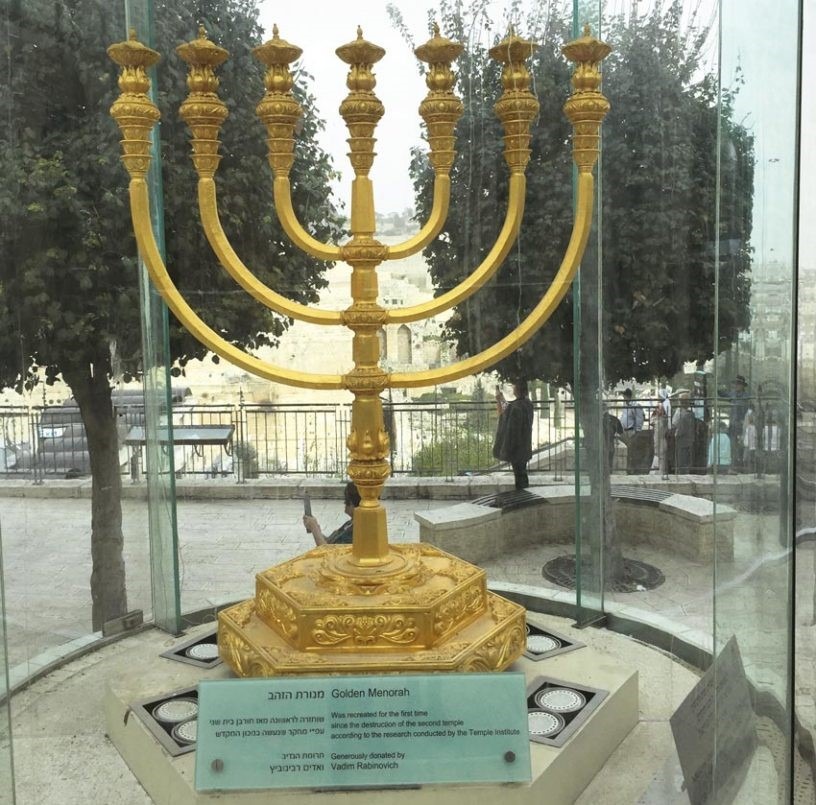
“When you light the lamps [in the Menorah] …” (Bamidbar 8:2)


Hashem gave Moshe instructions on how to light the Menorah in the Mishkan. The Midrash Raba (15:5) says that the Jews asked Hashem, “’You asked us to light [the Menorah] before you. [But] You are the Light of the World!’” Why would Hashem need our light if He is the source of all light?! Hashem answered that of course He does not need our light. Hashem wanted us to provide a light for Him just as He provided light for us. What does that mean? The Midrash explains that Hashem wanted us to light the Menorah for two reasons. Hashem wanted to elevate our position amongst the nations. Hashem wanted them to view us with the utmost respect “They should say, ‘Look how the Jewish nation lights for the One who lights up the whole world.’”  Secondly, Hashem wanted to give us an opportunity to repay Him now for lighting our way in the desert, in order that we not feel the pressure of having a burdensome debt of gratitude to repay Him at a later point in time.

 The trait of hakaras hatov, showing gratitude and appreciation for kindness and favors, is a very praiseworthy trait and one of the noble characteristics of a Jew. There are many instances where the Torah teaches us the importance of appreciating everything that Hashem or people do for us.

King David rose at midnight every night and thanked Hashem for His kindness to King David’s great grandmother, Rus. During the harvest, Boaz had slept near his fields to protect them from robbers. Boaz awoke in the middle of one night and found a woman, Rus, in his tent.  He could have easily become angry and cursed her. How dare she come to him in the idle of the night? Had Rus been cursed, King David would not have been born. Instead, Hashem caused Rus to find favor in the eyes of Boaz. Boaz blessed her noble intentions and agreed to perform the mitzvah of yibum, of marrying her, if a closer relative would refuse. They did marry and King David was their great grandchild. Every night King David thanked Hashem for this kindness done many, many years ago.

If so, why would Hashem give us the mitzvah of lighting the Menorah so that we no longer would feel indebted to Him? Why would Hashem want us to feel as if we are already repaid the favor and that we didn’t owe Hashem a further feeling of gratitude?

Furthermore, was this act needed to elevate us in the eyes of the other nations? Didn’t they already know that Hashem loved us dearly? Hashem had performed so many miracles for us, taking us out of Egypt and throughout our sojourn in the desert (see Rashi Bamidbar 14:13,14)?

The Maharzu on this Midrash explains. Indeed, we were already elevated in the eyes of the other nations. When the Midrash says “to elevate us before the other nations” it means to elevate ourselves. Hashem asked us to light the Menorah in the Mishkan as an expression of His love for us.

Hashem wanted to make us feel special and beloved to Him. Why would we need it? There was a possibility that the average Jew would not have fully appreciated why Hashem had lit the way for us in the desert. The average Jew may have felt that Hashem did it because of His mercy and not because of His love. [It is interesting to note that people could possibly have felt this way after all the miracles that Hashem had done for us. A discussion of this is not in the scope of the current dvar Torah]. After all, Hashem is merciful to all His creations. Maybe that is why He had lit the way for us. Hashem would have done the same thing for any other nation. To counter that feeling, Hashem instructed us to light the Menorah in the Mishkan for “Him”. That expression of love made it clear that when Hashem provided light for us in the desert it was because of His great love for us and not solely because Hashem is merciful to all.

Hashem does so much for us because His love for us is boundless. It is a pleasure to show our gratitude to Hashem in any way that we can. That shows that we reciprocate the endless love.

Based on a dvar Torah by Rabbi Alter Henach Leibowitz zt”l

Parshas Naso: Peace At All Costs!

Parshas Naso

Peace At All Costs!


“And the kohain shall write these curses in a scroll, and he shall blot them out into the water of bitterness” (Bamidbar 5:23)

The Midrash Rabbah (Bamidbar 9:20) cites a fascinating story. A certain woman used to attend Rabbi Meir’s weekly Friday evening shiur. One Friday night, the shiur ended a little later than usual. When this woman returned home, her husband asked her where she had been. She replied that she had been at Rabbi Meir’s shiur. Her husband was upset and told her that he would not let her come home until she would spit in Rabbi Meir’s face! The woman returned to the beis medrash to daven to Hashem. Meanwhile, Eliyahu the prophet revealed himself to Rabbi Meir. He told Rabbi Meir what had happened to this woman. When Rabbi Meir saw the woman, he pretended that his eye was bothering him. He asked the woman to please spit into his eye, seven times. When she finished, Rabbi Meir told her to return home and tell her husband the following: “You asked me to spit [in Rabbi Meir’s face] once, but I did it seven times!”

Rabbi Meir’s actions disturbed his students. They felt that allowing the woman to spit in his face was a degradation of Torah. Rabbi Meir responded that he had learned from Hashem to forego his own honor to bring peace between a husband and wife. Where did Rabbi Meir learn this?
From the story of the sotah, in this week’s parsha. The Torah discusses a case in which a husband was suspicious of his wife’s fidelity and told her not to seclude herself with a specific man. Yet, she ignored him and secluded herself (the rabbinic prohibition of not secluding oneself in a room with the opposite gender was instituted later, during the time of King David). Her husband then brought her to the kohain. If the woman did not admit her guilt, that she had not been faithful to her husband, she had to drink a special drink. It was a mixture of water, taken from the kiyor, together with some dirt from the floor of the Beis Hamikdash. In that mixture was a parchment, containing some psukim, including Hashem’s Holy Name. If the woman was guilty, her stomach swelled up and she died. [The waters of the sotah would only affect her if her husband had been faithful to her]. If she was innocent, then she returned to her husband. Hashem said that he would grant her children as a reward for the shame that she had suffered (Ibn Ezra). If she had difficult childbirths in the past, then future childbirths would more comfortable. She may also give birth to children who were more beautiful (Rashi). Drinking this potion and remaining alive proved beyond a doubt that she was free of guilt and her husband could take her back as a wife. Although it is normally prohibited to erase Hashem’s name, Hashem permitted His Holy Name to be erased to bring peace between husband and wife. This was the lesson that Rabbi Meir learned from the Torah. To foster peace between husband and wife, one should be willing to forego his own personal honor, even the honor of one representing Torah.

Although it may be difficult, sometimes a husband or wife must forego slights to their personal honor for the sake of peace.

Although guiltless of infidelity, the sotah still acted inappropriately. She secluded herself in a room with a man, after her husband had told her not to. Even for such a woman, Hashem permitted His Holy Name to be erased, to bring peace between the couple.

Aharon Hakohain also loved peace and actively pursued it (Pirkei Avos (1:12)). He had been anointed Kohain Gadol by Hashem. In many ways he was as great as Moshe Rabbeinu. Yet he was willing to sacrifice his personal prestige for the sake of peace.

The Talmud (Kallah Rabbasi Perek 3) tells us that when Aharon heard that two men had quarreled, he would go to one and say to him, “Peace be upon you, my master!” to which the man replied, “Peace be upon you, my master and teacher! What does my master seek here?” Then Aharon said, “Your friend sent me to you to appease you. He said, “I have offended my friend”. The man was so impressed that such a righteous man as Aharon had come to appease him. He said to Aharon, “Master, it was I who offended him”. Aharon went to the other man and said the same to him. When the two men met, they would ask each other for forgiveness. Similarly, when Aharon heard of a husband and wife who had quarreled, he would go out of his way to make peace.

Aharon’s actions earned him the love of the entire Jewish nation. In fact, after his death the entire Jewish People, both men and women, mourned him (Bamidbar 20:29) whereas by Moshe’s death, only the men mourned (Devarim 34:8).

Many couples whose marriages had been strengthened by Aharon, showed their gratitude by naming their next son after him. At Aharon’s funeral, there were 80,000 other “Aharon’s” that walked behind him in the funeral procession (Kallah Rabbasi Perek 3).

Both Aharon Hakohain and Rabbi Meir learned their lesson from Hashem. It is a lesson for all of us.

To foster peace between two people or between husband and wife, one should be willing to forego his own personal honor.

Parshas Bamidbar: Win a Phew, Lose a Few!

Parshas Bamidbar

Win a Phew, Lose a Few!


“The sons of Yosef, the sons of Ephraim…The sons of Menashe” (Bamidbar 1:32,34)

The Talmud (Rosh Hashana 16B) says that we blow the shofar on Rosh Hashana to confuse the Satan. The Satan thinks that the sound he hears is the sound of the shofar, heralding the arrival of Moshiach. Therefore, he restrains himself from bringing accusations against the Jews in the Heavenly court. The Talmud quotes Rabbi Yitzchok who says whenever the shofar is not blown at the beginning of the year, on Rosh Hashana, will be a year that ends with suffering. Tosefos explains in the name of the Hilchos Gedolos that the Talmud is not referring to a year when the first day of Rosh Hashana is on Shabbos, when the shofar may not be blown. Rather, the Talmud means that the shofar was not blown due to an o’ness, an unforeseen circumstance that was out of our control.  We see that even if the shofar can’t be blown due to no fault of our own, the fact remains that the Satan will not be confused. He will bring accusations against the Jews and some harm will result.

Our forefather, Yaakov, told Yosef that his two sons, Ephraim and Menashe, would be considered as Yaakov’s own sons: they would head separate shevatim, tribes. 

The parsha lists the numbers of men in each tribe between the ages of 20 and 60. The Ba’al Haturim questions why the Torah didn’t say, when counting Ephraim and Menashe, these are the children of Yosef; Ephraim had such and such and Menashe had such and such. Rather the Torah says, “These are the children of Yosef. These are the children of Ephraim…These are the children of Menashe.” The Torah seems to be excluding Yosef from the count. The Ba’al Haturim attributes this to the fact that Yosef did not personally carry Yaakov’s coffin from Mitzrayim to Eretz Yisroel. Yosef was considered royalty and royalty was not permitted to carry coffins. Since Yosef did not carry his father’s coffin, the Torah did not want to attribute to him the count of his shevet.

Obviously, Yosef wanted to carry his father’s coffin and due to no fault of his own, was unable to. It was an o’ness, not in his control. Yet, since he did not show this honor to his father, the Torah did not give him this honor of having his family counted under his name.

Rabbi Yissachar Dov Rubin in his Sefer Talelei Oros quotes HaRav, Simcha Zissel Ziv, the Altar of Kelm who draws a beautiful lesson from this Ba’al Haturim. Even if a person has an excellent excuse for not doing a mitzvah due to no fault of his own, the fact remains that he still did not perform the mitzvah. “If others are counted as having performed a mitzvah, and you are not counted amongst them, then your portion will have to be smaller than theirs, even if your absence was not your fault!”

When the Jews brought their first Pesach sacrifice, there was a group who were impure and were unable to bring the sacrifice. They were impure because they were involved in a very important mitzvah, carrying a dead body. (Some say they were carrying Yosef‘s remains to be buried in the Land of Israel. Others say they were carrying a mes mitzvah, a dead body that had no one else to bury it). They were unable to bring the sacrifice due to an o’ness. Yet, it still would not have been considered as if they brought the korban Pesach. They were not happy with that and complained to Moshe about the lack of fairness. Hashem responded that they will have an opportunity to bring their Pesach korban one month later, during Pesach Sheni.

We should always be grateful for the opportunity to do a mitzvah and not feel relief when we are unable to do it.


Parshas Matos-Masai: I Worked Hard and Succeeded! Thank You Hashem!

Parshas Matos-Masai

I Worked Hard and Succeeded! Thank You Hashem!


“Arm from among you men for an army… one thousand per tribe… from all the tribes of Israel….” (Bamidbar 31:3-4)

(Based on a story told by Rabbi Yoel Gold) In July 2014 there was a war in Gaza. Betsy, from Beverly Hills, California called a special hotline and was given the name of a soldier to pray for. The name was Barak ben Orna. The following summer, Betsy went to Israel for a visit. She “decided’ to visit Herzliya for the day. She “decided” to go to Meat and Wine Co., one of the two kosher restaurants. Betsy was first ushered to a table without a view. She asked the waiter to please move them upstairs, next to the window. When she sat down upstairs, a different waiter brought them the menu. As he walked away, he said, “By the way, if you need anything, my name is Barak.” Betsy immediately got the chills. Betsy asked her husband to find out Barak’s mother’s name. Sure enough, it was Orna! In shock, she asked if he’d fought in Gaza the summer before. He was amazed that she knew that. When Betsy told Barak that she had been davening for his safety, he was touched to tears. Here, at his table, was this stranger from the other side of the world who knew about him and had kept him in her prayers. A few weeks later, Betsy received a letter from Barak. He told her that he was not particularly religious and hadn’t prayed in a long time. However, after meeting Betsy, he was so inspired that he started putting on tefillin and started davening every day. Barak had been touched by seeing how much a stranger cared for him.

Hashem told the Jews to fight against Midian to punish them for the 24,000 Jewish deaths that they had caused. The Midrash Rabbah says that each tribe contributed three thousand men. One thousand fought, one thousand took care of the supplies, and one thousand came with them to daven. The total was 36,000 men.

Rav Yechezkel Levenstein, the late mashgiach of the Mir yeshiva, asks a few questions (cited in Sefer Talelei Oros). The war against Midian was a mitzvah, commanded by Hashem. Thus, success was certain. If so, why was it necessary to have so many men enlisted to daven? Furthermore, those men who davened, davened on the front lines. Why was that necessary? Why couldn’t they have stayed in the camp and davened there?

Rav Yechezkel answered with an insight into human nature. The soldiers on the battlefield were tzadikim, righteous men. Even so, there was a concern that after their victory, these men would, to some extent, attribute their success to their own powers. They would feel that it was their military strategy or their strength that contributed to their victory. They would forget that they only succeeded because of Hashem. To counter this feeling, there had to be an equal number of men praying and fighting. In addition, the men praying had to be on the front lines where the fighters could always see them. That would remind the fighters that their victory was only due to Hashem. The fighters had to see the force of prayer in order to acknowledge it. Knowing, without seeing, would not have had the same affect.

Often, we work hard on a project. We feel good when it is successful. We think that it succeeded only because of our efforts. Our efforts are important, but our success is only because of Hashem! The strongest proof of this is when you see two people put in the same effort yet only one of them is successful.

As hard as we work on something, we must always remember that our success is only because Hashem wills it!

Parshas Pinchas: If You See Something, Say Something!

Parshas Pinchas

If You See Something, Say Something!


“Pinchas … has turned away My anger from the children of Israel, in that he was very jealous for My sake among them….” (Bamidbar 25:11)

According to the Department of Homeland Security, “…as you are going about your day, if you see something that doesn’t seem quite right, say something. By being alert and reporting suspicious activity to your local law enforcement, you can protect your family, neighbors, and community”.

Alexander Ciccolo was arrested by FBI agents on July 4, 2015 in Adams, Massachusetts, with a knife tucked in his belt. He was carrying a duffel bag with two handguns and two rifles that he had just picked up from a confidential human source. He was headed back to his apartment, where law enforcement would find partially constructed Molotov cocktails, two machetes, and a pressure-cooker that could be used to construct an improvised explosive device like the ones detonated two years earlier at the Boston Marathon. Ciccolo had been looking for ways to inflict the most bodily harm with an attack. The reason no one was ever wounded by one of his explosives or struck by bullets from that cache of guns is because Ciccolo’s father tipped off the FBI about his son’s growing ISIS obsession. He saw something and said something and saved lives.

On May 5, 2010, Faisal Shahzad of Bridgeport, Conn., parked a blue Nissan Pathfinder near the Minskoff Theatre in New York’s Times Square and left the vehicle running with the emergency lights blinking. Packed in the rear of the SUV were 250 pounds of fertilizer, three 20-gallon propane tanks, two 5-gallon gas cans, dozens of M-88 firecrackers, gunpowder and two alarm clocks intended to trigger the concoction. Just two minutes after the car bomb was deployed, though, alert street vendors noticed something amiss. They called the police. They saw something and said something and saved lives.

The Jewish People had witnessed a terrible sin of immorality between Zimri, the Prince of the tribe of Shimon, and Kozbi, a princess of Moav. Not a single Jew protested (there are various explanations as to why not). The Jewish People are like “one being” and are responsible for one another. If one sins, his fellow Jew is usually obligated to say something to him. Since not a single Jew protested, they were all somewhat culpable in the sin. Therefore, they were all guilty to be punished. A plague started killing Jews. They saw something and said nothing and were guilty to be punished.

At that point, Pinchas acted. To stop this public desecration of Hashem’s name and to stop the plague, Pinchas killed both Zimri and Kozbi. He acted without any thought for his own personal safety. In fact, Hashem performed numerous miracles, saving the life of Pinchas and ensuring his success.

Pinchas had another thought in mind. He wanted Hashem to forgive the Jewish People for their silence. In order to accomplish that, the Sforno says that Pinchas made a point of killing Zimri and Kozbi in front of the Jewish People. If the Jews would remain silent and not protest or try to stop him, they would attain forgiveness for their previous failure of remaining silent and not rebuking the sinners. They saw something and said nothing and attained forgiveness.

The Jewish People are responsible one for the other. If one sees a fellow Jew sin, in many cases he must say something in a nice and respectful way. He should explain to the sinner the beauty of Torah and mitzvos and the importance of following in Hashem’s ways.

Parshas Balak: The Power of Truth! Hee Haw!

Parshas Balak

The Power of Truth! Hee Haw!


“Am I not your she-donkey that you have ridden all your life until this day? Have I been accustomed to do such a thing to you?” He said, “No.” (Bamidbar 22:30)

Bilaam, the prophet of the non-Jews was so excited. He hated the Jews. Even as an adviser to Pharaoh in Egypt, Bilaam was the one who had suggested that Pharaoh persecute the Jews. Now Bilaam was on the way to curse the Jews. Balak, the king of Moav, had promised Bilaam much honor and much riches in exchange for doing so. Bilaam was so eager to receive all that honor and all those riches. He loved both very much.

Bilaam saddled his faithful donkey to ride to Moav. On the way, Bilaam’s donkey exhibited unusual behavior. First it left the road and walked on the field. Bilaam hit the donkey to guide it back on to the road. Sometime later it, approached a vineyard with a narrow space between two fences. It squeezed itself to one side, pushing Bilaam’s foot against the wall and injuring it. Bilaam again hit the donkey. Later, they reached a narrow trail. Bilaam’s donkey crouched down and refused to move. Bilaam got very angry at his donkey and hit it again. Hashem performed a miracle and Bilaam’s donkey started talking to him. “What have I done to you that you struck me these three times?” Bilaam replied, “Because you mocked me! If only I had a sword in my hand, I would have killed you now.” The donkey responded, “Am I not your she-donkey that you have ridden all your life until this day? Have I been accustomed to do such a thing to you?” To that Bilaam had to respond, “No.” At that point, Hashem opened Bilaam’s eyes to see why his donkey had stopped. An angel was standing there with a sword in his hand. It was an angel of mercy to try to save Bilaam from sinning in his attempt to curse the Jews. The donkey had a good argument. Bilaam, the wise man and prophet, representing the other nations of the world, was silenced by his donkey. His donkey was correct, and he was wrong to have hit it.

The Sforno elaborates on this. The donkey told Bilaam that if it kept stopping, it must have been for a good reason. The donkey had served Bilaam faithfully for many years without disobeying. Suddenly, now it disobeyed. That fact should have been obvious to such a wise person as Bilaam. Bilaam should have realized logically that the problem was not his donkey. Rather, the problem was that Hashem was unhappy about the mission that Bilaam was on.

Why didn’t Bilaam realize the obvious? The Sforno explains that Bilaam was blinded by his strong desire for money and honor (22:32). That desire blinded him from seeing what was obvious. The result was that Bilaam was totally embarrassed in front of Balak’s messengers who saw his ineptitude. They thought it was humorous that a man who was going to curse an entire nation couldn’t control his donkey without hitting it. Furthermore, the donkey debated Bilaam and won!

What made Bilaam realize his error? When his donkey stated the obvious truth, it jolted Bilaam and caused him to admit that he was wrong.

The Midrash Rabbah (Braishis 93:10) quotes the sage Abba Kohen Bardela’s reaction to Bilaam’s inability to answer his donkey’s criticism. “Woe unto us on the day of [final] judgement. Woe unto us on the day of rebuke!” The shame that Bilaam felt upon hearing the truth is the same shame all of us will feel on the day that Hashem judges us. When Hashem shows us the truth we will be overwhelmed with embarrassment. When Hashem shows us that we actually had the ability to do something good or that we truly had the strength to overcome our desires, we will be stunned into silence.

We see that the desire for wealth and riches can blind a person from seeing what is obvious.
We also see the power of truth to wake up a person to his mistakes. It can also help redirect his course in life!

Parshas Chukas: Derech Eretz Moves Mountains!

Parshas Chukas

Derech Eretz Moves Mountains!


“The outpouring of the rivers when it veered to dwell at Ar, and leaned against the border of Moav.” (Bamidbar, 21:15)

Rabbi Yitzchak Elchanan Spector was one of the most famous Rabbis and Talmudic sages of the 19th century. One day when he was busy in his study, one of his students knocked on the door to tell him that his student, Yaacov, had been excused from the army draft. Rabbi Spector had been anxiously awaiting the news whether or not his student would be conscripted into the Russian army. He heartedly thanked the bearer of the good news. A few minutes later, another student knocked on the door with the same message. Rav Yitzchak Elchonon did not want to tell him that he already knew because he wanted the boy to feel joy of being the bearer of good news. He excitedly thanked this second boy. A few minutes later another student knocked on his door. Again, Rav Yitzchak Elchonon expressed his great happiness at hearing the good news. In this way he made this student too, feel that he was the only one informing him of the good news. This is an example of Derech Eretz.

The Jews were on their way to enter the Land of Israel. They reached the territory of the Emorim. Rashi says that the Emorim planned a surprise attack to annihilate all the Jews. The Jews had to pass through a very narrow valley between two mountains that were quite close to each other. The Emorim concealed themselves in mountain caves. They planned to shoot arrows and hurl stones at the Jews as they passed in the very narrow valley below. The Jews would be helpless against them. As the Jews approached the valley, the mountain on the Emorite side (which later became part of Eretz Yisroel) started moving. It moved toward the other mountain until it was pressed against it. Jagged rock formations from that mountain entered perfectly into the caves of the other mountain, crushing all the Emorite soldiers. The Jews were unaware of the danger that they had been saved from. When the Jews passed the area, the mountain that had moved returned to its original position. Hashem wanted the Jews to appreciate the great miracle that He had done to save their lives. Hashem sent the well of Miriam to flow through the valley and carry the blood and smashed limbs of the dead Emorites to the encampment of the Jews. When the Jews realized the great miracle that had saved their lives, they sang a song of praise to Hashem.

Why did the mountain on the side of Eretz Yisroel move? Rashi compared it to a maidservant who upon seeing her mistress, rushes to great her. When the mountain saw the Jews, the true owners of Eretz Yisroel, approaching, it humbly moved towards them. When the Jews passed on, the mountain returned to its original place.

The Sifsei Chachamim asks, Why didn’t the mountain move back immediately after killing the Emorites, allowing the Jews to see Hashem’s miracle right away? Why did the mountain wait until the Jews passed through before it moved back? We know that Hashem does not do any unnecessary miracles. Had the mountain moved back immediately, Hashem would not have needed the additional miracle of having the well of Miriam flow through the valley to bring the Emorite remains to the Jewish encampment.

The Sifsei Chachamim answers that a servant who goes to greet his master does not return to his place until his master passes out of his sight. Thus, the mountain of Eretz Yisroel waited until the Jewish people, its “master”, was out of sight before returning to its place.

The Sifsei Chachamim is teaching us a very important lesson in derech eretz, respectful conduct. Hashem performed an extra, “redundant” miracle for the mountain in order to show proper derech eretz for the Jewish people.

Acting like a mensch precedes our Torah learning. The Rabbeinu Yonah explains that having derech eretz helps one attain and retain his Torah learning. The Sefas Emes (Mishpatim 12) says that the mitzvos between man and his fellow man, ones’ behavior to his friend, is part of the Oral Torah that Hashem gave us. Furthermore, we merit Torah on a level commensurate with the refinement of our middos. The Torah learning then helps one to achieve a higher level of refinement in middos, which in turn helps one to achieve an even higher level of learning. This cycle continues.

We must always act with derech eretz, proper and refined conduct. It is more than just being nice. It is a Torah obligation.